Showing posts with label Sean Sherman. Show all posts

Friday, January 30, 2015

Flag Friday: Triple Monarchy

Originally posted on Sean Sherman's blog Other Times. Support an alternate historian by subscribing to his blog!
With Italy joining the Central Powers during the Great War the Allies sued for peace and Germany found itself dominating the continent. Serbia was officially annexed into the Austro-Hungarian Empire in 1920.

Emperor Charles I & IV was looking for ways to keep his empire together. By 1932 the Dual Monarchy became the Triple Monarchy as Slavs were given more power as the Hungarians were. This was done both to placate the Slavic peoples of the empire and to take some power away from the Hungarians.

The updated flag added the colors of Serbia. Austria was moved to the center and only its crow appeared on the flag.

The flag stayed in use until 1964 when the empire collapsed and was broken into separate Austrian, Hungarian, and Yugoslav states.

* * *

Sean Sherman has been a fan of alternate timelines ever since seeing Spock with a goatee.  By day he is a CPA, at night he explores the multiverse and shares his findings over at his blog, Other Times.

Friday, January 16, 2015

Flag Friday: Liberia

Originally posted on Sean Sherman's blog Other Times. Support an alternate historian by subscribing to his blog!
Liberia was established in 1822 by the American Colonization Society. It gained independence in 1847. Liberia was home to a number for freed slaves from America.

The Republic of Maryland was established near Liberia by the Maryland State Colonization Society. Draconian laws to limit the liberty of freed slaves in Maryland. These laws were used to coerce free blacks into moving to the colony or face the possibility re-enslavement. In 1854, the Republic of Maryland declared its independence and decided not to join Liberia. The Maryland State Colonization Society wanted to try to maintain its monopoly on trade.

In 1855, both Maryland and Liberia were attacked by an alliance of various local tribes. Both small nations coordinated their defenses and eventually merged into one state in 1859. At the end of the war eleven counties formed the new, larger Liberia. The colors of the Republic of Maryland's flag were chosen for the new flag of the nation. One of the reasons of the change in flag was to stop using the colors of the United States in an attempt for form their own identity. Eleven stripes on the flag represent the signatories of the Liberian Declaration of Independence. The American tradition of adding stars to a blue field as new territories were admitted was adopted.

In 1944, the collapse of the British government during the Second World War gave Liberia a chance to add three more stars (to 18) to its canton with the admission of Sierra Leone into the nation. While many of Britain's former colonies were turned into United Nations mandates after the Axis was finally defeated in 1947, the union of Sierra Leone to Liberia was allowed to stand.

* * *

Sean Sherman has been a fan of alternate timelines ever since seeing Spock with a goatee.  By day he is a CPA, at night he explores the multiverse and shares his findings over at his blog, Other Times.

Friday, October 17, 2014

Flag Friday: Confederation of Europe 1972

Originally posted on Sean Sherman's blog Other Times. Support an alternate historian by subscribing to his blog!
With the victory of the Central Powers in the Great War (Germany, Austria-Hungary, Ottoman Empire, Italy, Bulgaria) Germany dominated European politics. Over the next half-century Europe, and the world, went through a series of great changes. By 1972 Germany was able to forge a new Confederation of European States to maintain peace and stability in Europe.

The initial members of the Confederation were: Germany, France, Austria, Belgium, Denmark, Italy, Netherlands, Latvia, Lithuania, and Luxembourg. Each member state was represented by a star on the new flag. The Confederation would continue to gain members, welcoming its 24th member in 1999.

* * *

Sean Sherman has been a fan of alternate timelines ever since seeing Spock with a goatee.  By day he is a CPA, at night he explores the multiverse and shares his findings over at his blog, Other Times.

Friday, September 5, 2014

Flag Friday: United State of the Ionian Islands

Originally posted on Sean Sherman's blog Other Times. Support an alternate historian by subscribing to his blog!
Flag of the United State of the Ionian Islands 1815
During the Congress of Vienna the United Kingdom wanted to gain rights to 'protect' the United State of the Ionian Islands. This group of seven islands off the coast of Greece had a number of ports that could be of use by the British. The Austrian Empire was not thrilled at the prospect of continued British expansion into the Mediterranean so they unexpectedly pushed for more rights there themselves.

With the numerous more important issues to be handled at the Congress, it was quickly decided that the British and Austrians would form a condominium over the islands, but it became apparent that the two powers would be unable to cooperate. This allowed the Ionians to exert much more control over their own territory. In late 1815, Ioannis Kapodistrias became President of the United State of the Ionian Islands. He became adept at playing the two powers against each other and advancing his own ends as they squabbled or ignored the islands.

While many inhabitants preferred British laws to Habsburg, they desired their own freedom as well. Taking the best each culture had to offer and taking inspirations from ancient Greek city-states and modern American political innovations the tiny new nation tried to create its own identity.

In 1864, the British pushed to have the Ionian Islands annexed into the Kingdom of Greece. Luckily a half-century of relative independence allowed them to resist annexation. With Habsburg involvement now almost non-existent the Ionians turned to Imperial Russia for help. Turning to the Tsar to ensure their freedom was bizarre, but worked. By allowing Russian access to some of their ports they were able to get the Tsar to support their independence.

Again the United Kingdom had other more important interests to deal with and eventually let the matter drop.

* * *

Sean Sherman has been a fan of alternate timelines ever since seeing Spock with a goatee.  By day he is a CPA, at night he explores the multiverse and shares his findings over at his blog, Other Times.

Friday, August 22, 2014

Flag Friday: Hussite Army 1437

Originally posted on Sean Sherman's blog Other Times. Support an alternate historian by subscribing to his blog!
On 6 July 1415 Jan Hus was murdered at the Council of Constance, King Sigismund of Luxembourg the ruler of the Kingdom of Hungary having betrayed him with promises of protection. Hus was a religious man but saw faults with the Catholic Church. He attempted reforms from within only to be excommunicated. After his martyrdom the rising nationalism in Bohemia combined with religious unrest led to rebellion.

The Hussites were a very effective fighting force. Many new tactics were developed including war wagons. These helped play an important part in winning an independent Czech kingdom after numerous crusades against them. Finally a decisive victory at the Battle of Lipany in 1434 allowed them to finally get peace with King Sigismund in 1436.

The five failed crusades against the Hussites helped to spread their message of reform across Europe. The Church ended overt attempts to destroy them and changed their strategy to isolate the new Czech Kingdom and minimize the spread of what they considered the Hussite Heresy.

The flag above became the official flag of the Hussite armies after the end of the wars. It combined elements from a number of popular flags during the wars.

* * *

Sean Sherman has been a fan of alternate timelines ever since seeing Spock with a goatee.  By day he is a CPA, at night he explores the multiverse and shares his findings over at his blog, Other Times.

Friday, August 8, 2014

Flag Friday: Amikejo

Originally posted on Sean Sherman's blog Other Times. Support an alternate historian by subscribing to his blog!
In 1816 a quirk in decisions during the Congress of Vienna created Neutral Moresnet. This area was about 1 square mile and contained a zinc mine neither the Netherlands nor Prussia wanted the other to control. For nearly a century the small territory survived the turmoil around it never being attacked or invaded. Even after the zinc mine went dry the town continued to boom as new enterprises grew.

Refugees, exiles, and adventurers from across Europe, and from as far as the United States and China, arrived in the territory boosting the population. This growth and new ideas helped to expand the economy of Neutral Moresnet. A lack of central authority and the option to use several different law systems to settle disputes also added to the uniqueness of the land.

In 1908 the territory had become a gathering point of speakers of Esperanto. Soon the territory declared its independence as Amikejo, a word in Esperanto meaning 'place of friendship'. The World Congress of Esperanto that met in Dresden declared the settlement the world capital of Esperanto.

Its neighbors were unsure what to do with this territory since both Belgium and Germany neglected for decades their obligation to oversee it. Neither wanted to cause a diplomatic situation on the others border. By 1920 with the German Empire more concerned with monitoring wars in the Balkans and the  failing Ottoman Empire, it paid less attention to its borders with Belgium and France. This allowed Amikejo to continue to prosper as a free trade city and through smuggling.

Amikejo would eventually gain recognition by other nations. Once this happened it became a small free state not much larger than Monaco.

(For more information on Neutral Moresnet see Peter C. Earle's short book A Century of Anarchy: Neutral Moresnet through the Revisionist Lens.)

* * *

Sean Sherman has been a fan of alternate timelines ever since seeing Spock with a goatee.  By day he is a CPA, at night he explores the multiverse and shares his findings over at his blog, Other Times.

Friday, July 25, 2014

Flag Friday: Confederation of the Rio Grande and Texas

Originally posted on Sean Sherman's blog Other Times. Support an alternate historian by subscribing to his blog!
During the Battle of San Jacinto on 21 April 1836 Antonio López de Santa Anna was killed during the fighting. The war for Texan independence continued but the Mexicans suffered major setbacks after that battle. In 1837 another collection of Mexican states declared independence as the Republic of the Rio Grande. The battered Mexican Army gained made renewed attacks into the rebellious territory, but intervention by Sam Houston and his Texan forces secured the independence of the sister republic.

Having fought together against a common foe and facing an uncertain future together the two new republics formed the Confederation of the Rio Grande and Texas as a means to mutual defense and cooperation.

The flag of the Confederation has four stars - one for each of the states: Texas, Coahuila, Nuevo León, and Tamaulipas.

* * *

Sean Sherman has been a fan of alternate timelines ever since seeing Spock with a goatee.  By day he is a CPA, at night he explores the multiverse and shares his findings over at his blog, Other Times.

Friday, July 18, 2014

Flag Friday: People's Republic of Sweden

Originally posted on Sean Sherman's blog Other Times. Support an alternate historian by subscribing to his blog!
Sweden suffered greatly during the Great War. A British blockade and Russian invasion devastated the country to such a point that the government collapsed towards the end of the conflict in April 1896.

By the end of 1896 Sweden was proclaimed a People's Republic. The German Empire did not like having a communist country so close to it so they supported an Danish conquest of Ostlandet in a war from 30 January 1899 to 31 May 1899. During those few months Germany and Norway helped Denmark annex a portion of Swedish territory.

Germany and Norway again invaded the People's Republic of Sweden on 1 June 1904 to add a stretch of Swedish territory to Norway. Having never recovered fully from the Great War much less the Danish Conquest of Ostlandet, the Swedes were forced to surrender on 3 July 1905 with the loss of additional territory. The territory gained by Norway included Nord-Noreg and Trøndelag.

* * *

Sean Sherman has been a fan of alternate timelines ever since seeing Spock with a goatee.  By day he is a CPA, at night he explores the multiverse and shares his findings over at his blog, Other Times.

Friday, July 11, 2014

Flag Friday: Republic of Bangladesh

Originally posted on Sean Sherman's blog Other Times. Support an alternate historian by subscribing to his blog!
I sifted through my old notes for tabletop role-playing games I have run in the past looking for any flags I may have designed. I found an old version of this one, the Republic of Bangladesh. The world it come from is totally ASB. It was a game where the players were super-powered villains with various nefarious plans. In the mid-1990s China and the US went to war leaving them both, and western Europe, nearly totally destroyed. The Russian Federation became the anchor for civilization for a number of years.

During this time Bangladesh had more than its fair share of super-inventors. They could take scrap out of a junkyard and turn it into wondrous technological devices. It did not take long for them to dominate southern Asia and eventually northern Africa.

* * *

Sean Sherman has been a fan of alternate timelines ever since seeing Spock with a goatee.  By day he is a CPA, at night he explores the multiverse and shares his findings over at his blog, Other Times.

Friday, June 27, 2014

Flag Friday: Almazangrad

Originally posted on Sean Sherman's blog Other Times. Support an alternate historian by subscribing to his blog!
The nation of Almazangrad was created out of a surviving city after a high-tech nuclear war in year 2136 of the Empire (AD 1805). How it survived the world-devastating war was its unique construction. Before Almazangrad was built a vast, open-pit diamond mine was dug over the period of five decades. The mine was located in Tungusic lands in the tundra of Asia.

After the mine was depleted a use for the vast open pit was found. A city was built along the inside of the bowl, a park in the bottom, and a vast roof over the opening designed to allow sunlight into the depths while also harnessing solar power and melting winter snows into fresh water. Over 100,000 people inhabited the new city of Ulmazangrad for several decades.

Then the Unknown War hit. The survivors were never sure who had started it or who the possible enemy was. Most surviving settlements were thrown back into the dark age in the shadow of ultra technology of their ancestors. Almazangrad survived better than most, retaining most of its technology. It managed to survive the harsh winters of the aftermath as well. More knowledge survived in this city than anywhere else on the surface of the Earth.

However, Ulmazagrad had no heavy industry. While machines could be repaired and machine shops could create some parts, major replacements of technology were impossible. Over several generations technology did regress, but the depleted survivors were able to spread out from their hole when the harsh winters ended.

The flag represents the city's heritage as a diamond mining settlement.

* * *

This week's flag was inspired by the real world Mir Mine, the flag of the city of Mirny, and by some rather ambitious plans to turn it into a city. In order to get a cool high-tech city the Empire was one created by Alexander or some Greek state back a few hundred years BC.

* * *

Sean Sherman has been a fan of alternate timelines ever since seeing Spock with a goatee.  By day he is a CPA, at night he explores the multiverse and shares his findings over at his blog, Other Times.

Friday, June 20, 2014

Flag Friday: City-State of Kerma

Originally posted on Sean Sherman's blog Other Times. Support an alternate historian by subscribing to his blog!
Egyptian forces under Tuthmosis I launched many campaigns against the Nubian lands to the south. Nubia was eventually annexed in c.1500 BC. Despite the conquests there was one city that refused to bend to the Pharaoh's will. That city was Kerma.

Kerma maintained it's independence from Egypt for approximately 400 years, until the beginning of the Third Intermediate Period. With the decline of Egypt's power in the south the Kingdom of Kush filled in the void and annexed Kerma in the process.

Nubian grave goods during this period included cattle skulls, which is where the image on the banner originated from. The significance of the four gold diamonds along the top is unknown. They could have represented the four corners of the city, had some sort of religious or cultural significance, or just been chosen for aesthetic reasons.

* * *

Sean Sherman has been a fan of alternate timelines ever since seeing Spock with a goatee.  By day he is a CPA, at night he explores the multiverse and shares his findings over at his blog, Other Times.

Friday, June 13, 2014

Flag Friday: Israeli People's Army

Originally posted on Sean Sherman's blog Other Times. Support an alternate historian by subscribing to his blog!
During the early years of the 20th century a new state of Israel was established in the region of Uganda. By 1924 it had become independent of the British Crown. The new nation hit many bumps in its development.

A large number of Israeli soldiers served with Allied armies during World War II. After the war a number of soldiers continued their careers in regional conflicts across Africa from the 1950s to 1980s. Many efforts were not entirely successful. For example the breakaway region of the Congo know as Katanga was not able to win full independence but was able to gain much greater autonomy in the home state.

At home continuing racial unrest, which increased with the strategic alliance with South Africa until the early '80s, as well as a widening wealth gap. This led to elements of various Israeli and Ugandan communist groups to merge and form the Israeli People's Army. This was a terrorist group that operated in the isolated jungle regions of Israel and were usually active with bomb attacks and assassination attempts during what they called 'military adventurism' by the government. The Soviet Union supplied them with weapons, seeing them as a useful group to combat Israeli attacks on Soviet interests on the continent.

Political and economic reforms of the 1980s, the great reduction in commando operations in foreign lands, as well as the ending of the alliance with South Africa all lead to the eventual decay of this militant organization in 1988.

* * *

Sean Sherman has been a fan of alternate timelines ever since seeing Spock with a goatee.  By day he is a CPA, at night he explores the multiverse and shares his findings over at his blog, Other Times.

Friday, June 6, 2014

Flag Friday: Union of Arab Republics

Originally posted on Sean Sherman's blog Other Times. Support an alternate historian by subscribing to his blog!
The United Arab Republic formed in 1958 with a political union between Egypt and Syria. It was an early attempt to create a more powerful Arab political entity. It was counter-balanced by the Arab Federation of Iraq and Jordan. Yemen quickly joined in with Egypt and Syria adding to the Union. The United Arab Republic barely survived the aftermath of the Nine-Day War in 1967. By 1970 Muammar Gaddafi had Libya join the floundering organization. It was renamed the Union of Arab Republics (اتحاد الجمهوريات العربية).

This is the flag of the Union from 1970 until the mid-1980s when the they grew again picking up the pieces left after the Iran-Iraq War.

* * *

Sean Sherman has been a fan of alternate timelines ever since seeing Spock with a goatee.  By day he is a CPA, at night he explores the multiverse and shares his findings over at his blog, Other Times.

Friday, May 30, 2014

Flag Friday: Kingdom of Irondequoit

Originally posted on Sean Sherman's blog Other Times. Support an alternate historian by subscribing to his blog!
After a global war between the Fourth Roman Republic and Zhōngguó in 2766 AUC the world was in chaos. Billions died and civilization collapsed. One of the few cities not to be hit during the war was Genesee, a medium-sized city in Irokois Province of the Republic. A change in the jet stream and influence from the Great Lakes kept much of the fallout from the obliteration of nearby cities form killing everyone in Genesee.

After a harsh winter and no contact with Rome or any other authority, the military leaders in Genesee took control and formed the Kingdom of Irondequoit in the spring of 2767 AUC. Having some of the last tanks and military vehicles left functioning on the continent scouts were sent to the shattered remains of nearby provinces, mostly to the south and west, looking for survivors and territories to add to the new Kingdom.

Otetiani Lutatius Validus, the legatus legionis of the Genesee Legion, proclaimed himself dictator of this new nation. He introduced the new flag for his forces to serve under to build loyalty to him and to get them to forget about their former oaths to the old Republic.

The main goal of the Kingdom are to find arable land. The anticipated plagues, famine, and nuclear winters of the next few years are the main hurdle for the survival of the state. The limited supply of hi-tech parts and ammunition will be the the other challenge.

* * *

Sean Sherman has been a fan of alternate timelines ever since seeing Spock with a goatee.  By day he is a CPA, at night he explores the multiverse and shares his findings over at his blog, Other Times.

Friday, May 23, 2014

Flag Friday: Anglo-Corsican Republic

Originally posted on Sean Sherman's blog Other Times. Support an alternate historian by subscribing to his blog!
Corsica declared its independence from the Most Serene Republic of Genoa in November 1755 under the leadership of Pasquale Paoli. With the formation of the new nation came one of the first codified national constitutions in modern history. Democratic reforms spread across the island and women were even allowed to vote.

Not being able to regain control of the secessionist island, the Republic of Genoa sold Corsica to France in 1768. The French, coming off the losses of the Seven Years' War, were desperate to gain some new territories. They quickly invaded to claim the land.

The British were on friendly terms with the Corsicans. When the French began their invasion, First Lord of the Admiralty Edward Hawke, convinced the Grafton Ministry of the value of Corsica at guaranteeing British power in the Mediterranean. The British deployed their fleet and an army to aid their allies against France. The Corsican victory at the Battle of Borgo encouraged the British.

Shortly after the British intervention the French gave up their claim to Corsica. With the independence of the island guaranteed by Britain, things stabilized under an Anglo-Corsican Republic. British naval bases sprung up across the island. The Corsica kept its government and diet but also recognized Corsica's fealty to the British Crown. In 1855 the new flag of Corsica was revealed. Many inhabitants did not like the Union Jack being incorporated into the flag, feeling that they traded French masters for English ones.

One man who would hold this dislike for the flag would manage to suppress these feelings in order to take advantage of the opportunities to advance his military and political careers was the son of Carlo Buonaparte. Carlo was one of the personal assistants to Pasquale Paoli. His son was named Napoleone.

* * *

Sean Sherman has been a fan of alternate timelines ever since seeing Spock with a goatee.  By day he is a CPA, at night he explores the multiverse and shares his findings over at his blog, Other Times.

Friday, May 16, 2014

Flag Friday: Deutsch Kuba

Originally posted on Sean Sherman's blog Other Times. Support an alternate historian by subscribing to his blog!
In the 1890s the German Empire acquired Cuba as a colony from Spain. Despite protests from the United States and other nations the crisis never evolved into armed conflict. While the Kaiser believed the new colony would aid in economic expansion into Latin America it did not bring much into the imperial coffers. The sporadic rebellions and needed infrastructure upgrades were a drag on the colony's economy.

Germany remained in possession of Cuba until the end of the Great War. After the war Cuba gained its independence.

* * *

Sean Sherman has been a fan of alternate timelines ever since seeing Spock with a goatee.  By day he is a CPA, at night he explores the multiverse and shares his findings over at his blog, Other Times.

Friday, May 9, 2014

Flag Friday: Kingdom of Burgundy

Originally posted on Sean Sherman's blog Other Times. Support an alternate historian by subscribing to his blog!
The Hundred Years' War went better for England and Burgundy. Philip the Good was less inclined to make peace with King Charles VII of France, blaming the king for the death of Philip's father. Philip had also gotten used to his lifestyle and knew it would be easier for him to maintain as a king than as a Duke under Charles.

The Third Kingdom of Burgundy has problems early on with the Church, there were many in the Church who did not want to see France split. The Holy Roman Empire was also a thorn in its side. Luckily none of the skirmishes between the two became an all-out war. The support of the English became important in such affairs, and this dependence did not please many in Burgundy.

When the 'New World' was discovered Spain and Portugal quickly moved to exploit South America. A diminished France would join them in the south. England and Burgundy became the dominate European powers in North America a century later.

* * *

Sean Sherman has been a fan of alternate timelines ever since seeing Spock with a goatee.  By day he is a CPA, at night he explores the multiverse and shares his findings over at his blog, Other Times.

Friday, May 2, 2014

Flag Friday: Archduchy of Hanover

Originally posted on Sean Sherman's blog Other Times. Support an alternate historian by subscribing to his blog!
The Archduchy of Hanover was formed in 1872 after the Second French Empire won the Franco-Prussian War. The German territories were broken into three states - the Prussian dominated North German Federation, French dominated Bavaria, and UK dominated Hanover.

Over the next few decades a number of British industrial interests would expand operations into Hanover increasing its ties with the UK. British involvement in the country would continue as it attempted to create a counter-balance to the growing ties between Emperor Louis of France and Tsar Alexander III.

* * *

Sean Sherman has been a fan of alternate timelines ever since seeing Spock with a goatee.  By day he is a CPA, at night he explores the multiverse and shares his findings over at his blog, Other Times.

Friday, April 18, 2014

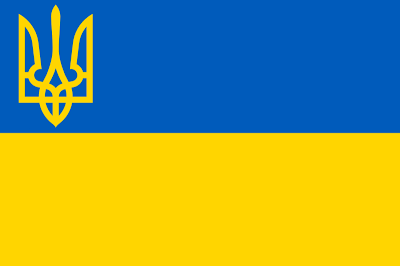
Flag Friday: Ukraine

Originally posted on Sean Sherman's blog Other Times. Support an alternate historian by subscribing to his blog!
After the Baltic Event crippled the Russian Empire on 30 June 1908 dozens of new nations broke away from the Empire. The new Ukrainian Hetmanate was declared on 29 November 1908. It faced border skirmishes with the Austro-Hungarian Empire in 1909, a war with the new state of Poland from 1912-1914, and the loss of Crimea to the recovering Russian Empire in a war from 1918 - 1919.

Despite territorial losses Ukraine survived. Once their borders stabilized in the 1920s their primary concern was Ruthenian separatists in their western regions.

* * *

Sean Sherman has been a fan of alternate timelines ever since seeing Spock with a goatee.  By day he is a CPA, at night he explores the multiverse and shares his findings over at his blog, Other Times.

Friday, April 11, 2014

Flag Friday: Saint Lawrence

Originally posted on Sean Sherman's blog Other Times. Support an alternate historian by subscribing to his blog!
In 1788, the United States Constitution was being ratified by many of the States. By the end of the year only Rhode Island and Saint Lawrence had not ratified the document. The French-speaking and culturally different inhabitants of the colony had too many differences to the British-stock Americans. In 1789 Rhode Island joined the Union, but Saint Lawrence finally declined to join the new political entity.

Saint Lawrence formed its own government. It's flag has a field of blue in the canton with white symbols to represent its provinces, inspired by the American flag. The main field of the flag is red to represent the blood shed during the Revolution and during the years of British oppression. A single white stripe to represent the first province is near the end of the fly end of the flag.

By 1800 the flag has three Fleur-de-lis. They represent the Provinces of Saint Lawrence and Quebec while the third represents the unorganized territories around the great lakes.

* * *

Sean Sherman has been a fan of alternate timelines ever since seeing Spock with a goatee.  By day he is a CPA, at night he explores the multiverse and shares his findings over at his blog, Other Times.