Showing posts with label Time travel. Show all posts

Friday, February 19, 2016

Plausibility Review: 11/22/63 by Stephen King

I introduced a new series on my YouTube channel called "Plausibility Review" where I take a look at the plausibility of various published alternate histories. In honor of the recent premier of 11.22.63, my first episode features Stephen King's 11/22/63:
Once again, thanks to Marc Pasquin for outdoing himself with the excellent looking images he provided for this video. If you are interested in seeing more of his work, check out his Deviant Art page.

* * *

Matt Mitrovich is the founder and editor of Alternate History Weekly Update, a blogger on Amazing Stories and a Sidewise Awards for Alternate History judgeWhen not writing he works as an attorney, enjoys life with his beautiful wife Alana and prepares for the day when travel between parallel universes becomes a reality. You can follow him on FacebookTwitter and YouTube. Learn how you can support his alternate history projects on Patreon.

Friday, August 21, 2015

Book Review: The IX by Andrew P. Weston

I really wanted to enjoy The IX by Andrew P. Weston. It had a really cool concept. Humans on the verge of death are pulled from different eras of the past by a powerful alien entity to fight an army of seemingly endless murder machines, all the while having to overcome the cultural and language barriers to become an effective fighting force. Sounds like a fun action romp with a level of sophistication. Its in the execution, however, that the book lost me.

We learn that an alien race, called the Ardenese, which are described as really tall humanoids with large foreheards (sort of like the aliens from This Island Earth) are on the verge of extinction. Another alien race of energy beings who feed off the bio-electrical fields generated by other organic beings (sort of like the aliens from Final Fantasy: The Spirits Within), known as the Horde, are winning their war against the Ardenese, who are holed up in their last city. The Ardenese, however, have a plan. They will upload their minds into an incredibly advanced super-computer, called the Architect, that will scour space and time to discover an alien race that can fight for them until the Horde is defeated and they can repopulate their plant.

Of course, that race is humanity, and at first the Architect only pulls humans from our distant future, but their advanced energy weapons have no effect on the Horde. A lucky break happens, however, when it is discovered that the Horde are obliterated by contact with iron. Thus when the ninth wave of human draftees are brought in, they come from eras of time where iron is still used in their weapons. These include, the Ninth Legion of Rome from 120 AD, a US Calvary Regiment from 1860 and a special forces squad from the mid-21st century.

Even with the time travel, alternate history content is minimal or non-existent depending on how you perceive the history being presented by Weston. Let me explain: the characters from 1860 include a US Cavalry company and several Native Americans on their way to negotiate a peace treaty for Senator Lincoln with an alliance of the Cree, Lakota, Sioux and Apache. They are prevented from doing so after rogue members of the company lead them into a trap because there is grand conspiracy involving the aforementioned tribes and several southern states (due to Sam Houston's involvement) who want to overthrow the US government.

Where do I begin? First off, Lincoln was never a senator. Second, those tribes are scattered between Canada and Northern Mexico and all speak different languages, so the chances of them forming some alliance like the one described in the book is implausible. Plus, the Lakota are actually a sub-group of the Sioux, but the author makes it very clear throughout the book that they are a separate tribe. Third, Sam Houston as governor of Texas actually opposed his state's secession from the Union during the American Civil War so the idea of him being part of some coup attempt seems far-fetched. Finally, Weston seems to imply to real reason the Civil War began was because the Southerners and Great Plains Indians were just trying to overthrow a central government they didn't believe in anymore, which is a troublesome theory about that period of history for someone to have in my opinion.

Now this may be the alternate history, but there really is no clear point of divergence and they do come from the same timeline as the Ninth Legion. To be fair Weston did a better job of presenting the history of the Legion. There are some historians who believe they disappeared in modern-day Scotland, even if there is evidence that the whole or portions of the legion survived on the continent. Problems occur with his description of the Caledonians they were fighting before being taken to Arden. One tribe is called the Iceni, which is actually the name of tribe that inhabited modern-day Norfolk during the Roman occupation of England, and while my preliminary research does show they occasionally practiced cannibalism, the description in the book of groups of them stopping to feast on wounded Roman soldiers like zombies from The Walking Dead was just too silly to take seriously. They also referred to themselves as Caledonians, which is wrong since "Caledonia" was the name the Greeks/Romans gave to modern-day Scotland and the native inhabitants would have called themselves something else.

Besides the bad history, how was the rest of the book? Well, not good. The book is poorly written with too much tell and not enough show. There was also a lot of "As You Know, Bob" moments where one character explains to another character some aspect of the story that both should already know. This is done to provide important exposition to the reader, but it is also not how people normally talk to each other. In fact, most of the dialogue is stilted. This wouldn't be so bad if the book was heavier on the action, which Weston writes pretty well, but most of The IX is just talking about things that are just boring. Even the inner thoughts of the characters are uninteresting and, to be frank, it was hard to tell when they were doing that. Sometimes the inner monologues were in italics, as is traditional in most books, but other times they weren't in italics or highlighted in any way to differentiate them from the rest of the text.

The characters from the future are bland and indistinguishable from each other, despite many coming from time periods centuries apart. Even the characters from the past come off more like stereotypes instead of well researched characters, although they are amazingly smart and are somehow able to point out obvious things about the enemy that the future humans, who have been fighting them for much longer than the new arrivals. Also everyone seemed to have taken the fact that they will never see their homes or loved ones again fairly well and drop old animosities almost instantly so they can fight in a war they've never asked for. Ignoring the psychological impact of what the Ardenese did to the humans it dragged into their war was a grave omission in my opinion. Instead what we do get is overused tropes like ancient aliens and hand-waving issues such as language barriers thanks to magical technology.

To be completely honest, I didn't finish this book. I gave up on it after I was more than halfway done. What was the last straw for me was when I was forced to read a five page memo on how an iron ore mining operation was going. From the context of the book, the memo was being proofread by a character before he sent it to his superiors. I'm sorry, but that is just lame. I know background info is both important and difficult to express to readers in an entertaining way, but their are ways to do it. Take a “Hot Night at the Hopping Toad" by SM Stirling. Although not my favorite story in The Change, it still presented what life was like in a post-apocalyptic college town through the eyes of two likable and interesting characters who were catching up with each other over dinner and drinks at a local bar. Then, just to keep things interesting, there is bar fight, someone dies and a murderer needs to be uncovered. Stirling added conflict to make his story interesting and I never saw the conflict in The IX. The Horde never seemed like a real threat and from what I did read, I never even saw them kill a single human. Without real conflict, it is hard to have a good story.

Despite what I said above, I'm once again the lone voice of dissent in a sea of praise. The IX has a ton of good reviews on both Amazon and Goodreads that I just don't understand. Maybe the book picks up in the second half, but if a book can't hold my attention after 300 pages, I don't see any reason to continue with it. I will admit that when there is action happening the book can be enjoyable and Weston certainly praises the work of soldiers in this novel, so if you like that then go ahead and pick up a copy. Otherwise, I can't recommend The IX. I can, recommend, The Misplaced Legion and its sequels by Harry Turtledove, which has similar themes to The IX and is better written.

* * *

Matt Mitrovich is the founder and editor of Alternate History Weekly Update, a blogger on Amazing Stories and a Sidewise Awards for Alternate History judgeWhen not writing he works as an attorney, enjoys life with his beautiful wife Alana and prepares for the day when travel between parallel universes becomes a reality. You can follow him on FacebookTwitter and YouTube. Learn how you can support his alternate history projects on Patreon.

Friday, August 14, 2015

TV Review: Outlander Season 1, Episodes 1-8

When I bought my wife, Alana, Outlander by Diana Gabaldon as a gift, I didn't expect her to fall in love with the series. To be honest I had little interest in reading the books myself, not because I thought they would be bad, I just wasn't interested. Watching the Starz adaptation, however, now that was something I was cool with. So over the last few weeks Alana and I sat down to watch the first eight episodes of Starz's Outlander and here I am now to share with you my thoughts on the series so far.

Outlander tells the story of Claire Randall, a WWII nurse who goes on a second honeymoon to Scotland with her husband, Frank, in an effort to reconnect with him. While there she accompanies Frank on his journeys to dig up more information on his ancestor, Captain Jonathan "Black Jack" Randall, who served in Scotland during the 18th century. Things seem to be going well, but Claire appears troubled and her relationship with Frank at times seems strange. Marital problems take a back seat, however, when a trip alone to see the standing stones at Craigh na Dun send Claire back in time to 1743 where she almost immediately runs into Black Jack who looks surprising like his descendant, but lacks the same good manners when he tries to rape Claire.

Rescued by a group of Scottish highlanders, Claire becomes a guest of Clan MacKenzie, but she soon finds herself held against her will because the Scots believe she is an English spy. While spending her time working as a healer in the castle, Claire decides she must either earn the trust of the MacKenzie's or escape so she can make it back to the standing stones in hopes that whatever brought her to the past can be reversed. Escape, however, goes further and further from her mind as she develops a relationship with the young Jamie Fraser.

Alternate history content is minimal in Outlander. Claire is afraid of telling anyone she is from the future in fear they will declare her a witch. She does learn, however, that the MacKenzies are supporters of the Jacobites and in a few years many would die at the Battle of Culloden, with the Highlander culture being suppressed by the English in order to break the power of the clans. She tries to warn them without giving away how she knows they will lose, but no one really cares because either they are sure they will win or else they don't see the possibility of defeat as a deterrent to their cause. This gives the entire tale a level of tragedy that makes it sad, but also entertaining, because some of the best stories out there don't have happy endings and I have feeling neither will Outlander.

Overall I found Outlander enjoyable to watch. It has drama and action to lighten the mood, but maybe could have done with a little more, although I have been told things will start picking up in later episodes. I should talk about the "female gaze" of the show. Unlike Game of Thrones, which is perhaps Outlander's main competition, more time is spent admiring the male rather than the female figure. You would think that takes me out of their core demographic, but it really isn't as excessive as you think. I am just saying don't start thinking Outlander is for "chicks".

Claire is a "strong and independent woman", even for her own time, but she is allowed to be weak, scared, wrong and helpless as well. More importantly, unlike other female protagonists that people fawn over (i.e. Bella from Twilight), Claire actually does things. She is a battlefield nurse, well-educated and in her own way she can be quite fearless. She can still be rescued, but sometimes she rescues herself or others as well. In short, she is allowed to be human and not a cliche.

The Scottish characters are also complex and even the scoundrels have their moments. I just wish they put more effort in the English characters. Most come off either as pompous, sadistic or spineless. I am reminded more of the British from The Patriot then what actual mid-18th century Englishmen were like. Black Jack is really difficult to watch as well. Yeah I know he is the bad guy, but they play up how evil he is so much that he becomes cartoonish in some scenes. Perhaps this is because the show (and possibly the books as well, but again I didn't read them) does tend to romanticize Highlander culture. This isn't bad per se, but after doing so well in so many other aspects of the show, its a shame they decided to phone it in with the non-Scottish characters.

One last thing: having not read the books, I don't known when the show diverges from the source material. My wife, however, was happy to point out some of these moments to me, like in one episode where we see Frank who has been spending weeks searching for his missing wife and is beginning to believe that she ran off with another man, due to his sighting of a mysterious Highlander staring at her through her window one night. I thought it was a nice human touch for the show and as the episode skipped between the past and present, I noticed the coloring was different. Things were brighter in the past, especially the greens, while things in the present seemed more subdued. A nice touch by the producers if I do say so myself.

All and all I can certainly give the first half of Season 1 of Outlander a passing grade. Its not perfect, but when it does something right, it does it very well. While I don't hold out hope to see any alternate history, I do expect to continue to be entertained and educated about a time period I know little about.

* * *

Matt Mitrovich is the founder and editor of Alternate History Weekly Update, a blogger on Amazing Stories and a Sidewise Awards for Alternate History judgeWhen not writing he works as an attorney, enjoys life with his beautiful wife Alana and prepares for the day when travel between parallel universes becomes a reality. You can follow him on FacebookTwitter and YouTube. Learn how you can support his alternate history projects on Patreon.

Monday, August 3, 2015

Weekly Update #199: Time Travel is Dangerous

Editor's Notes

Only 1 week away from Weekly Update #200 and a special announcement from yours truly. On top of that, I will most likely surpass 700,000 total views this month. Suddenly 1,000,000 views does not sound that impossible anymore.

In more secretive news, I had a fun time Saturday talking with a certain alternate historian you all should know rather well. Our project is gaining a momentum and we both look forward to sharing it with you all very soon.

And now the news...

4 Reasons Why Time Travel is Dangerous!

If there is one thing I learned this week from the news its that TIME TRAVEL IS DANGEROUS!!! Here are the four reasons why you should think twice before jumping into that time machine:

#1: The People in the Past Are Crazy. Such as this maid who killed her employer in 1870, took over her life and even fed the fat boiled off from the dead body to children. Yikes! So much for those Victorian morals.

#2: You Could Accidentally Destroy Yourself. According to science, if time travel were real you would inevitably create two versions of yourself that would eventually meet and annihilate the other. So perhaps Doc Brown wasn't that far off when he cautioned Marty about running into himself in the future.

#3: Your Historical Ignorance Can Be Your Undoing. People often assume they know history, when they really don't. Just check out these popular historical misconceptions that could cause a lot of problems for you, especially if you try to change the past. This brings me to my last point...

#4: The Outcome is Always Unclear. You just can't control what will happen if you change the past, whether it is intentionally or by accident. Who knows what damage you could cause. You may even wipe out the United States!

So leave time travel to the professionals. You know the ones I am talking about: alien outlaws, crazy scientists and cops who speak with a Belgian accent.

Video of the Week

This week the featured video goes to the new History Respawned video on Tropico 5:
This episode featured John Harney as he talked with Dr. Renata Keller of Boston University about how Tropico 5 parodied US-Cuba relations, racial dynamics in the Caribbean and how difficult it is using humor to tell history.

Honorable mention goes out to Alternate History Hub's What if the Drug War Never Occurred?

* * *

Matt Mitrovich is the founder and editor of Alternate History Weekly Update, a blogger on Amazing Stories and a Sidewise Awards for Alternate History judgeWhen not writing he works as an attorney, enjoys life with his beautiful wife Alana and prepares for the day when travel between parallel universes becomes a reality. You can follow him on FacebookTwitter and YouTube.

Wednesday, February 18, 2015

History, Alternate History and "Hitler's Time Machine"

Guest post by Robert F. Dorr.

The terms "history" and "alternate history" are opposite faces of the same coin. After many years of publishing military history books and articles inspired by writers like Cornelius Ryan and Stephen Ambrose, it was a complete flip-over for me to write an alternate history.

Hitler's Time Machine was published two months ago in December of last year. The book is an experienced non-fiction author's fledgling attempt at alternate history.

My most recent book before Hitler's Time Machine was a straightforward, historical account of a race on both sides to develop jet aircraft during World War II. From that departure point, it was easy to take the leap into something new and different for me — a fictional account of the race on both sides to develop time machines. The key to the alternate history Hitler's Time Machine for me was the experience of having already written character-driven narrative accounts of historical events.

All history is to some extent the recounting of, "What if?" What if a very brave soldier named George Washington had been killed in one of his early battles? What if some way had been found to supply Robert E. Lee's army with AK-47 automatic rifles? What if the American aircraft carriers had been in port when the Japanese attacked Pearl Harbor? Those kinds of speculations could easily find their way into a true history book and have already served as grist for alternate histories.

The line between history and alternate history isn't always sharply defined. In the nineteen century, a Swedish immigrant to the United States, for reasons unclear, changed his family name from Mansson to Lindbergh. At the end of that century, the father of the future leader of the Third Reich changed his family name to Hitler. It's difficult for us to imagine the first pilot to fly solo across the Atlantic Ocean being named Charles Manson (the American spelling) or throngs at a Nazi rally clicking heels, saluting and crying, "Heil, Shicklgruber!" but the name changes really happened. Does speculating about them constitute history or alternate history or a little of both?

In Hitler's Time Machine, I chose to use a mix of real and fictitious characters — the real ones as disparate as Franklin D. Roosevelt, Lou Gehrig and Hans Kammler. I mixed them up with imagined characters, threw them into the urgency of war, gave them new science both real and imagined, and had them fight their way to the finish of the story. My work on the book was inspired by a Virginia authors' group known as Write By The Rails and by a nationwide phenomenon called National Novel Writing Month.

* * *

Robert F. Dorr is an Air Force veteran (1957-60), a retired American diplomat (1964-89) and an author (since 1955) of thousands of magazine articles and about 75 books, all of them non-fiction except Hitler's Time Machine. Contact him at (703) 264-8950 or robert.f.dorr at cox dot net.

Friday, February 13, 2015

James Franco to Star in Hulu's "11/22/63" Mini-Series

Well chalk this up to one of the last things I expected to hear today. James Franco (The Interview) has been cast in the lead role of Hulu's adaptation of Stephen King's 11/22/63. The adaptation is being produced by J.J. Abrams’ Bad Robot Productions, who presumably is putting just as much effort into this as they are doing for Star Wars VII.

Joking aside, Franco will star as Jake Epping, a divorced English teacher who travels back in time to 1958 and decides to prevent the assassination of John F. Kennedy. His quest is threatened not only by Oswald and a budding romance, but also the obstinate past itself. Tiny spoiler alert, Epping actually does change the past in the novel and creates an alternate timeline. What happens next I leave to you to discover...

Franco will also be listed as a producer to the nine hour mini-series, so one hopes this is a sign of confidence in the project from the star. Still no word on when the show will premier or whether they will film in Dallas, but stay tuned to The Update for more information as it becomes known. What with this headline and the success of Amazon's The Man in the High Castle, this really is a great year to be an alternate historian with an Internet connection!

* * *

Matt Mitrovich is the founder and editor of Alternate History Weekly Update and a blogger on Amazing Stories. Check out his short fiction. When not writing he works as an attorney, enjoys life with his beautiful wife Alana and prepares for the inevitable zombie apocalypse. You can follow him on Facebook or Twitter.

Wednesday, February 4, 2015

Heidi Durrow and Koji Steven Sakai Accepting Proposals for Time Travel is Not for Everyone

I came across a curious time travel anthology in my Internet travels that I thought was perfect for Black Alternate History Month. Called Time Travel is Not for Everyone, it was conceived by Heidi Durrow, author of The Girl Who Fell from the Skyand screenwriter/producer Koji Steven Sakai and they are currently accepting time travel stories focusing on characters from underrepresented and minority communities

According to the press release: "Time travel is the ultimate imagined adventure for many. But for people from underrepresented and minority communities time travel could be more of a disaster than an adventure. An Asian American from 2015 who lands in the United States during World War 2, a gay married couple dropped in the middle of the conservative South in the 1950's, or a mixed-race person transported to Africa during the slave trade would face substantial challenges in those times."

“Before this, time travel has been limited to only a few people, we hope this book allows everyone to travel through time,” said Sakai. “This is a great twist on the time travel concept and we know some amazing writers are going to be as excited about contributing, as we are to be working with them.”

The submission deadline is March 1, 2015. Each proposal should include: 1) a one-page proposal featuring a main character from an underrepresented community traveling back in time; 2) a writing biography or resume; and 3) a writing sample of no more than 25 pages. Proposals and questions can be sent to Time.Traveling.4.All.of.Us at gmail dot com.

With time travel being one of the most popular methods of creating an alternate history, there is certainly a lot of potential for some good and original stories. If you plan to submit a story, please let us know.

* * *

Matt Mitrovich is the founder and editor of Alternate History Weekly Update and a blogger on Amazing Stories. Check out his short fiction. When not writing he works as an attorney, enjoys life with his beautiful wife Alana and prepares for the inevitable zombie apocalypse. You can follow him on Facebook or Twitter.

Wednesday, January 28, 2015

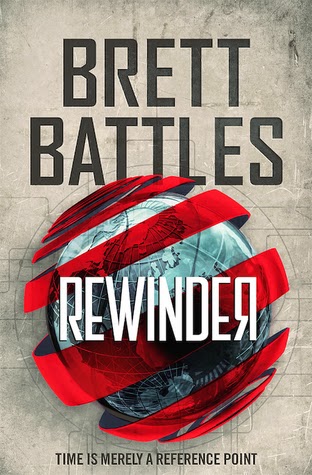
Book Review: Rewinder by Brett Battles

Occasionally you will find yourself one of the lone voices of negativity in a sea of praise. This is how I felt after I listened to the audio version of Rewinder by Brett Battles. Trust me, I wanted to enjoy the book, but in the end I had to be honest with myself and the readers like you.

Rewinder tells the story of Denny Younger, a young man born near the bottom rung of society in a world where the British Empire rules North America (with only the slight hiccup of the American Incident of 1775 to interrupt this rule) and most of the world. This Empire is rather more corrupt and oppressive than in our timeline (if there are citizens of the Commonwealth currently drafting angry comments, remember I didn't write the book). The British class structure, for example, is a de jure institution with people being born into and labelled according to their socio-economic status. Denny himself is an "8" (1s, 2s and 3s are considered the upper class) and destined to follow his father into his career at the power plant, but Denny is desperate to avoid this future. Good grades in school and excellent test scores earn him an invitation to join the Upjohn Institute and become a "rewinder". This institution verifies the personal histories of the Empire's nobility, but it does so using time travel. This is done through hand held devices called "chasers" that can take any rewinder anywhere in space and time.

As Denny trains at the Upjohn Institute and receives glowing praise from his teachers, he discovers that the Institute sometimes uncovers dark family secrets of the rich and powerful and uses these to blackmail and manipulate them. Although Denny doesn't always approve of the Institute's decisions, he nevertheless finds his new life an improvement over his old life back home. That is until he inadvertently changes the past. When he returns to the present he discovers the world he once known is gone. The Empire is no more. In fact Denny's hometown of "New Cardiff" is called in this alternate present "Los Angeles" and it is part of the "United States of America". Not knowing it, Denny created our own timeline.

I really wanted to like Rewinder. Vikas Adam did a great job narrating and the book itself had a lot of similarities with the excellent and influential Bring the Jubilee by Ward Moore. In both stories the protagonists come from poor backgrounds in an alternate timeline (in the case of Bring the Jubilee, a world where the South won the American Civil War). They find solace in the study of history and are invited to join a peculiar institute which gives them the ability to travel through time. In both stories the protagonist accidentally changes the past, but that is where the similarities end. Where the protagonist in Bring the Jubilee finds himself trapped in the new timeline (which is also our timeline), Denny finds that he has the opportunity to change things back to normal...but questions whether he should. On top of a budding romance he has with a young woman named Iffy, he also finds himself approving of this new history over his own history.

To be honest I am not sure why Denny agonized so long over the decision. To Battles credit he did give several examples to show the reader that our timeline wasn't perfect, but even the most jaded observer of current events would still pick our timeline over Denny's. I think Battles missed out on a golden opportunity to give Denny a real choice by making two timelines that had real pros and cons to both of them. Even the upper class antagonist who tries to stop Denny and, without trying to spoil the ending, arguably had even less reason then Denny for wanting the original timeline restored and yet opposed him because of...I don't know, spite? Seriously their motivation is even less clear than why Denny hesitated over what to do about the divergence he caused. Besides just not liking Denny for some reason, the best idea I could up with is that the upper classes of that alternate British Empire are just conditioned to never allow the lower classes to experience any moments of joy or pleasure (POLITICAL HUMOR ALERT: Just like those congressional Republicans, am I right? Huh? Huh? Okay I will never do that again.)

Besides those issues above, we have to admit that this is a time travel story so the usual plot holes apply. For example, Denny ends up wiping out his history, but he still exists and as does anyone else who may have been travelling in the past before the break occurs. Admittedly, this does not bother me that much. There seems to be an unspoken rule in many time travel stories that time travelers are immune from changes to history (i.e. Back to the Future). No, what bothered me the most was the actual method of time travel. As mentioned before, Denny travels through time with a device that can also teleport him to any location on the planet, even without travelling through time, a la Doctor Who.

This wasn't an issue at first until at one point in the story when Iffy, after learning that Denny is a time traveler who is planning to reset the timeline, tries to convince him to pick her world over his (again why this was such a difficult decision, I have no idea). In a clumsy argument by Battles, Iffy brags that her timeline had people landing on the Moon in the 1960s, while Denny has to embarrassingly admit his timeline had yet to accomplish such a feat and he felt like he needed to defend his timeline better. After listening to that scene I wanted to shout: "Hey Denny! You already have the ultimate trump card in your pocket. Its a freaking time machine! Has Iffy's timeline invented that? No, they haven't!"

Of course, it took me a while to fully realize the size of plot hole I was dealing with. Remember Denny's chaser is not just a time machine, it is also a teleporter. So...why doesn't the Upjohn Institute just teleport someone in a spacesuit to the surface of the Moon? Or Mars? Or hell, a world outside of the solar system? Why doesn't Denny's Britain rule a vast an interstellar empire? Its never really explained why they are stuck on Earth when they can literally move anywhere through space and time. In fact the Upjohn Institute's entire business strategy is pretty short-sighted when one comes to think about it. What happens after they verify the history of every powerful family in their highly stratified country? Its not like there are new noble families being made on a daily basis who can throw money at Upjohn in such a dystopia. The chaser isn't just a time machine, its also a TARDIS! Why blackmail rich people, when you can conquer the stars?

So we have poor character motivations and also a ridiculously advanced technology that is not used to its full potential. And yet...that isn't the worst issue with Rewinder. No, the one issue that really bugged me the most was Denny. I really get annoyed when an author just tells us how awesome a character is, but never shows it. A great example is Bella from the Twilight series, where every character is obsessed with her and yet she has little to no personality or impact on the story. Okay, perhaps it is unfair to compare Rewinder to Twilight. Maybe Denny is more like Neo from The Matrix, who we are told is an amazing computer hacker and yet needs to have AI and EMP spelled out for him (seriously, go watch those movies again or the Nostalgia Critic review and you will see that Neo is kind of an idiot).

We are told Denny really knows his history and yet we are shown him struggling to remember important historical events from his timeline. We are told he is incredibly bright and yet we are shown him struggling to comprehend the corruption of his world. We are told he has the making of a great rewinder and will be finishing his training long before his fellow trainees, but we are shown him erasing his entire history by his own clumsiness. I mean Denny is either a golden boy or clod, and I know what the author wanted us to think, but he certainly didn't prove that with the story. I think part of the problem stems from the fact that Denny is the audience stand in, but he is also the main character. I don't think the story would have been hurt that much if Battles tuned down the compliments people were showering Denny with.

In fact when you consider how easy it was for Denny to change the timeline, its amazing to think the Upjohn Institute didn't have some procedure in place to counter this. I mean Denny was still technically a trainee when he made his mistake, but his only instruction about changing the past was just not to do it. I mean are we supposed to believe no one has screwed up and...you know what, no. I'm done reviewing this. I have said enough bad things about this book. Let us conclude this review and later ponder why I always have more to say about a book I didn't like vs. a book I enjoyed.

In the end I really wanted to like Battles' Rewinder. It started off on a high note at the beginning, but my interest plummeted from then on. I kept listening, hoping that the story would go in another direction, but I was left disappointed. And yet, as I mentioned before, my poor review is in the minority for this book. People really seemed to like Rewinder, but I am not sure if I listened to same thing they did. So with that all being said, I can't recommend this book, but that's just my opinion. Maybe I am the crazy one here and you will end up enjoying Rewinder...but I seriously doubt it.

* * *

Matt Mitrovich is the founder and editor of Alternate History Weekly Update and a blogger on Amazing Stories. Check out his short fiction. When not writing he works as an attorney, enjoys life with his beautiful wife Alana and prepares for the inevitable zombie apocalypse. You can follow him on Facebook or Twitter.

Thursday, January 22, 2015

My Capricon 35 Schedule

So I will be panelist again at this year's Capricon. It is being held on Feb 12-15 at the Westin Chicago North Shore in Wheeling, IL. If any of you guys are planning to attend please check out these panels I will be speaking at:

If I Rob a Bank Seven Years Ago Today, Can You Arrest Me Tomorrow?
Friday, 02-13-2015 - 7:00 pm to 8:30 pm - Birch B
It's a paradox! How will time travel effect law and the statutes of limitations? Can you be tried for a crime you committed seven years ago in your personal timeline, but tomorrow in standard time? What other laws will be impacted by timey-wimey things?
Other panelists: Elizabeth Huffman and Patricia Sayre McCoy (M).

World War I as a Theme in SF
Sunday, 02-15-2015 - 1:30 pm to 3:00 pm - Ravinia A
2014 was the 100 year anniversary of The Great War. It has been a theme in books and comics, and we still read stories written by authors who fought in the war. How has World War I influenced the SF/F genre?
Other panelists: James Bacon, Chad Burns and Eric Flint (M).

Hmm...Eric Flint. I am sure I heard that name somewhere before. O well, it will come back to me eventually. In the meantime, you can check out the full schedule here and if you need more convincing, you can read what I thought about last year's Capricon.

* * *

Matt Mitrovich is the founder and editor of Alternate History Weekly Update and a blogger on Amazing Stories. Check out his short fiction. When not writing he works as an attorney, enjoys life with his beautiful wife Alana and prepares for the inevitable zombie apocalypse. You can follow him on Facebook or Twitter.

Friday, January 16, 2015

Preview: Rewinder by Brett Battles

Got a new audiobook from Audible that I will be reviewing. It is Rewinder by Brett Battles. Here is the summary:

You will never read Denny Younger's name in any history book, will never know what he's done. But even if you did, you'd never believe it. The world as you know it wouldn't be the same without him. Denny was born into one of the lowest rungs of society, but his bleak fortunes abruptly change when the mysterious Upjohn Institute recruits him to be a Rewinder, a verifier of personal histories. The job at first sounds like it involves researching old books and records, but Denny soon learns it's far from it. A Rewinder's job is to observe history. In person. Embracing his new life with enthusiasm, Denny witnesses things he could never even imagine before. But as exciting a life as this is, there are dangers, too. For even the smallest error can have consequences. Life-altering consequences. Time, after all, is merely a reference point.

Although you can't tell from the summary, Denny actually lives in a timeline where the British rule North America from sea to shining sea. Its an alternate history with a time travel element that puts me in the mind of "Bring the Jubilee". So far so good, but lets hope the rest of the book holds up.

* * *

Matt Mitrovich is the founder and editor of Alternate History Weekly Update and a blogger on Amazing Stories. Check out his short fiction. When not writing he works as an attorney, enjoys life with his beautiful wife Alana and prepares for the inevitable zombie apocalypse. You can follow him on Facebook or Twitter.

Wednesday, October 22, 2014

Videos for Alternate Historians #6

Due to the flood of videos I've watched this week, I decided to bring Videos for Alternate Historians to you a little early. First we begin with the talented Lindsey Stirling whose new song "Roundtable Rival" has a new music video with a steampunk atheistic:
Her last music video also had a strong steampunk influence as well. Next up, apparently we can see time travel:
And to finish, the guys at Cracked share five (well actually 6) terrible first drafts of iconic characters:
Yeah Woody was pretty frightening.

* * *

Matt Mitrovich is the founder and editor of Alternate History Weekly Update and a blogger on Amazing Stories. Check out his short fiction. When not writing he works as an attorney, enjoys life with his beautiful wife Alana and prepares for the inevitable zombie apocalypse. You can follow him on Facebook or Twitter.

Monday, June 9, 2014

Weekly Update #150

Editor's Note

So if everything goes well, The Update should surpass 400,000 page views this week. I will do my usual State of Blog post so we can all see how far The Update has grown. To help spur us on to this milestone I got a slate of new posts planned I think you will enjoy.

In other news I plan to record the first episode of Voices from Alternia this coming Saturday. If everything goes well we should have the show published early July.

And now the news...

Successio Launched!

Friend of The Update Alison Morton celebrated the release of her new novel Successio, the third book in her Roma Nova trilogy, last week. You can check out the description and book trailer on last week's New Releases.

Well Alison has of course been busy promoting Successio all over the place. She was in London for the launch day and has been guest posting at other author's sites including David Ebsworth and Joanne Philips. Tomorrow she will be at Tunbridge Wells Library in Kent if you are in the area and want to meet the author. Alison has even promised to send a guest post my way so expect an article from her in the near future.

If you want to read Successio before purchasing it, you can check out three excerpts on her blog (I, II and III). And thanks to whoever bought the entire trilogy by clicking through our Amazon banner!

Gaie Sebold steampunk sequel commissioned by Solaris

It has been announced that Jonathan Oliver, commissioning editor of Solaris Books, has commissioned Sparrow Falling, a sequel to steampunk novel Shanghai Sparrow by Gaie Sebold. The novel will be delivered in December 2014, for a summer 2015 publication. The agent was John Jarrold, and the deal was for UK/US rights.

Here is the description of Sparrow Falling from the press release:

Between the activities of her school for young ladies and her connections with the Folk, Eveline Duchen is somewhat busy. She finds herself between a rock and a hard place when she is recognised as being a wanted felon and her friend Lin is put into peril by the leader of the Chinese Folk, the Dragon. She must use her native cunning and ingenuity as never before to find a way out…

If you have read Shanghai Sparrow, why not send us your review for a chance to be published on The Update?

Video Gallery

We start this weeks Video Gallery with literary smack down between Edgar Allen Poe and Stephen King:
And we end it with a lesson in why time travel in films is rarely scientific:

Links to the Multiverse

Books


11 Totally Bizarre Takes On The Western Genre by John Joseph Adams at Huff Post.
Collaborating with Terry Pratchett by Stephen Baxter.
Cover & Synopsis: FOR A FEW SOULS MORE by Guy Adams (PLUS: HEAVEN’S GATE TRILOGY Cover Gallery!) at SF Signal.
Craig Cormick on “Creating an Alternate History World” at Bibliotropic.
Review: TRUTH AND FEAR by Peter Higgins at SF Signal.

Comics

REVIEW: Albert Einstein: Time Mason #1″Brain Game” at Geek Syndicate.
Sherwood, TX – Robin Hood Meets Texas Biker Gangs! at Geek Syndicate.

Counterfactual and Traditional History (Plus News)

Classic Anti-Fascist Photomontages from the 1930s and 40s by Vincze Miklós at io9.
Counterfactually Assessing the Impact of Primo Levi’s Death on his Writing by Gavriel D. Rosenfeld at The Counterfactual History Review.
No, TARP Didn’t Prevent a Second Depression by Stephen Moore at The Daily Signal.
What If we Reinstated the Draft? by David Fazekas at Yahoo.
What might have been: If Eisenhower had failed at D-Day by Mike Sarzo at All Voices.

Films and Television

10 Reasons You Need To Be Watching Penny Dreadful by Genevieve Valentine at io9.
Christopher L. Bennett Guest Post–”The Problem with Sherlock in a Post-Elementary World” at Locus.
It Happened Here or Why Alternate History Can Be Terrifying by R. Graeme Cameron at Amazing Stories.
Watch: Da Vinci's Demons' Tom Riley talks finale, series three and Peter Capaldi's twelfth Doctor by Kathryn Williams at Wales Online.

Interviews

Ian Rankin at My Bookish Ways.

Short Fiction

Apex Magazine Currently Closed to Submissions by Lesley Conner at Apex.
Harry Turtledove’s Tor.com Original Among 2014 Sidewise Nominees at Tor.
Interest gauge: anthology of Mormon alternate history by William Morris at A Motley Vision.
New "Beast of the Bosporus" Cover by Matthew Quinn at The World According to Quinn.
Review: Tales of the Venia Woods by Robert Silverberg at Pointless Philosophical Asides.
Table of Contents: TIME TRAVEL: RECENT TRIPS Edited by Paula Guran at SF Signal.
The U.S. Government Inflicted Horrible Atrocities On Cthulhu's Followers by Charlie Jane Anders at io9.

* * *

Matt Mitrovich is the founder and editor of Alternate History Weekly Update and a blogger on Amazing Stories. Check out his short fiction. When not writing he works as an attorney, enjoys life with his beautiful wife Alana and prepares for the inevitable zombie apocalypse. You can follow him on Facebook or Twitter.

Friday, May 2, 2014

SyFy Adapting Pax Romana and Other SF&F Properties

Deadline Hollywood is reporting that the SyFy channel, notorious for their B-movies starring Tara Reid, has made an announcement that has redeemed them a bit in this blogger's eyes. They will be creating a mini-series based on Pax Romana by Jonathan Hickman, along with other adaptions of famous SF&F comics and books.

For those who don't know, Pax Romana is a politically charged graphic novel where the Vatican develops time travel in a future where Islam dominates Europe and the West has rejected monotheism. They decide to send an army of Cardinals and special forces soldiers to 312 AD, during the reign of Constantine, to change past and save the future. Things, however, don't go as planned as different factions vie for control over how to fix the timeline.

Pax Romana is being adapted by writers Matthew Federman and Stephen Scaia (Warehouse 13), with David Alpert of Circle of Confusion (The Walking Dead) acting as executive producer, along with Federman, Scaia and Hickman. I have to say its a good sign when the creator is involved in the adaption (it works for Game of Thrones).

More importantly, we may get a chance to see some alternate history on the small screen. Casey Douglas at Geek Syndicate, however, summed exactly what we should all be thinking: will the end product live up to the original work? Only time will tell, but I will be praying for a successful production.

* * *

Matt Mitrovich is the founder and editor of Alternate History Weekly Update and a blogger on Amazing Stories. Check out his short fiction. When not writing he works as an attorney, enjoys life with his beautiful wife Alana and prepares for the inevitable zombie apocalypse. You can follow him on Facebook or Twitter.

Tuesday, April 29, 2014

Book Review: The Adjacent by Christopher Priest

Over at Amazing Stories I reviewed Christopher Priest's (the author of The Prestige) newest novel: The Adjacent. The story is told from the point of views of different characters, each from a different time period (or perhaps parallel dimension/state of reality), yet all seemingly connected. Did I like it or did it confuse the hell out me? You will just have to read the review to find out. Click on the bolded link to see the review.

* * *

Matt Mitrovich is the founder and editor of Alternate History Weekly Update and a blogger on Amazing Stories. Check out his short fiction. When not writing he works as an attorney, enjoys life with his beautiful wife Alana and prepares for the inevitable zombie apocalypse. You can follow him on Facebook or Twitter.

How to Make Your Parallel Universe, Time Travel or Steampunk Story Stand Out

Last week Charlie Jane Anders posted on io9 an article on the ten SF&F stories that editors are tired of seeing. Although there were a few types that I would agree with (i.e. zombies) I was taken aback by the inclusion of parallel universe, time travel and steampunk stories.

Now I am obviously a bit biased since those stories often come under the umbrella of alternate history. That being said, I can understand how their proliferation can be annoying to editors who act as the gatekeepers between readers and bad fiction (well, most of the time anyway). So if you are planning to write one of the three types of stories mentioned and want to be able to stand out, below are my suggestions.

Parallel Universes: Sheila Williams of Asimov probably summed it the best in the article by saying she would like to see more exploration of current theories. The multiverse theory has been in vogue as of late, but there aren't many works out there that have tried explaining it in terms a lay person can understand. Fiction is a good way to do that. On the other hand, you can also play around with some of the speculation scientist's have been making about the multiverse, for example, the different laws that govern the parallel universe. There is already precedent for this in Martinez' Daedalus series (which has a timeline where alchemy works) and Piper's Paratime series (which has a timeline where reincarnation has been scientifically proven). Some might dismiss those ideas as fantasy, but you can still have your own fun with physics in your universe.

Time travel: At Capricon I was on or attended several panels that discussed time travel in fiction. Of the many topics we discussed, one that stuck with me is that you rarely see an analytically look at what happens when a regular person goes back in time. Too many time travelers have it too easy going back to the past, quickly fitting in after only a few "fish out of water" moments. To survive permanently, however, in the real past and not Hollywood's misconceived notion of it, now that would be an interesting story to read. One that uses real historical data and what a regular person the present could realistically accomplish in the past. Also, don't treat people of the past as country bumpkins. For one thing it is insulting (they are your ancestors too) and for another it just doesn't make sense. Sure the Wright brothers probably won't know what to make of your iPhone, but when was the last time you built an airplane from scratch (or an iPhone for that matter)?

Steampunk: I have gotten a lot of criticism for the amount of steampunk I include on this blog, but suck it up, it is related to alternate history. There are, however, some ways to make it more palatable for alternate historians and editors alike. For one thing, why not mash up the genre with military SF? Not all military SF needs to take place in the future on some distant planet. Why not write a story on an old war where the combatants have more advanced weapons. I am not talking about Guns of the South by Turtledove, but steampunk inspired weapons that could have actually been built with some tweaking in the past. Take the American Civil War in a world where the Analytical Engine was completed and came into widespread use, igniting an earlier information age and fast technological growth, like what happened in The Difference Engine. Could the Confederacy have broken the Union blockade with advanced submersibles or would they be stymied by Union airship patrols? What would masters of modern warfare like Jackson and Sherman do with steam-powered war cars and clockwork artillery?

These are just a few suggestions from myself. How would you make the above story ideas stand out for picky editors?

* * *

Matt Mitrovich is the founder and editor of Alternate History Weekly Update and a blogger on Amazing Stories. Check out his short fiction. When not writing he works as an attorney, enjoys life with his beautiful wife Alana and prepares for the inevitable zombie apocalypse. You can follow him on Facebook or Twitter.
Wednesday, March 26, 2014

World Premiere of Theatrical Production of Tim Powers' The Anubis Gates at Loncon 3

The stage adaptation of The Anubis Gates by Tim Powers will premier at the ExCeL Exhibition Centre in London's Docklands this August at this year's Loncon 3, the 72nd World Science Fiction Convention. Check out the trailer here.

The Philip K Dick Award-winning novel is to be performed by Current Theatrics, a theater company based in Las Vegas and New York. According to the press release, the play features ancient Egyptian wizards, modern American magnates, holes in the river of time, Horrabin the Clown's puppet show, werewolf-like creatures, cheeky urchins, and California literature professors, not to mention famous Romantic poets Lord Byron, Samuel Taylor Coleridge, and William Ashbless. It is set mainly in London in 1810 but spans 200 years of time jumping. See more of the plot summary on Wikipedia.

The Las Vegas-based cast have been in rehearsal since Tim Powers approved the project in December 2013. The six-member cast comprises Erik Amblad, JJ Gatesman, Brandon Oliver Jones, Johnny Miles, Ariana Helaine, and Geo Nikols, all of whom are playing several roles - a task made easier by the novel's story line, which involves body switching.

Now a flight and hotel stay in London is a little to rich for this blogger's blood, but if any of our readers are going to check it out, let us know.

* * *

Matt Mitrovich is the founder and editor of Alternate History Weekly Update and a blogger on Amazing Stories. Check out his short fiction. When not writing he works as an attorney, enjoys life with his beautiful wife Alana and prepares for the inevitable zombie apocalypse. You can follow him on Facebook or Twitter.

Friday, March 14, 2014

Mozart In Alternate History

Guest post by Thomas Wm. Hamilton.

Most alternate histories that include historical people tend to concentrate on politicians and military leaders. This of course means wars, elections and other dramatic events get the attention.  But there are plenty of interesting and important people whose alternative lives can deserve attention.

Time for Patriots offers a combination of both traditional AH and introduces an alternative life for Mozart (with hints of similar effects on Hayden and Beethoven).  A physics experiment gone awry sends North Shore Military Academy back from the 21st Century to 1770.  Their modern copier allows convincing counterfeiting, and neighbors carried back with them aid plans to interfere in the Revolution.  None of this is tremendously different than one might expect, although black students have to pretend to be the slaves of those they command as the group infiltrates.

In our history Mozart had a very poor medical history, and died shortly before his 37th birthday of a disease that may have been anything from scarlet fever to pneumonia.  (The idea he was poisoned is a 20th Century fiction with no evidence--in fact, Salieri was later the music teacher of Mozart's younger son.)  History indicates he started looking ill in late September, and died in early December of 1791.

In Time for Patriots a group from the military academy decide, in violation of the academy's rules, to prolong Mozart's life.  They join a flotilla sent by Washington to discourage Barbary pirates, do a convincing job on the Bey of Algiers, and on a "show the flag" visit to Naples, slip away and head for Vienna.

In Innsbruck an Austrian national hero, Andreas Hofer, is warned against his ultimate betrayer.  This introduces an unintended butterfly effect that has major consequences later.

The three Americans meet Mozart's wife, Constanza, and treat the abscess on her ankle successfully.  Mozart is hired to write a march for the military academy while preserving their anonymity.  Mozart invites them to join him and his theatrical producer, Schickaneder,  at a rehearsal followed by indulging at a bierundweinstube. The conversation makes Mozart curious about their backgrounds and motives.   As he falls ill they treat him with modern medicine (he is a really big pain in the rump as a patient).

Mozart survives, and completes not only the march they asked for, but also an opera about Benjamin Franklin, and many other works before his death during "Napoleon's second siege of Vienna", in 1805.  His sometimes librettist, Da Ponte, however, repeats his experiences in OTL with no noticeable changes (defrocked for fooling around with women, marrying an English woman, and more) other than doing the Franklin libretto.  Thus he flees Europe and settles in New York, where he winds up teaching at Columbia, just as in OTL.  He eventually runs into one of the three who had visited Vienna in 1791, and learns the true story.  The written records of this turn up in 1926, a month after the first lunar landing.

In 1811 the time travelers send an agent to New Orleans at the behest of President Madison, to investigate rumors of spies and agents from many nations active there.  The agent watches the Great Comet of 1811, amused by the downtimers' opinions of it, but maintains his silence.  He stays at the House of the Rising Sun, quite innocent of knowledge of its history.  He learns, while checking out the spies, one of whom tries to kill him.

While the core group of time travelers try to prevent wars, the butterfly consequences of the warning given in Innsbruck result in the creation of the Tyrolean Republic, which allies with Bavaria and France.  World War I never happens.  Back in the USA the grandson of one of the time travelers is elected President in 1848, and uses tax money to purchase slaves in the four states still having slavery, averting the Civil War.

Mozart had sent copies of all his new works to the military academy's Music Director, not just the special march he wrote for the school.  A century later a music professor from Columbia and his history professor wife visit the academy to study Mozart's works, and find evidence of time travelers' interventions.  Will this be revealed to create chaos?

* * *

Thomas Wm. Hamilton a retired professor of astronomy, a planetarium director and author of Time for Patriots (Strategic Books, 2011). His anthology of 28 stories of science fiction, fantasy, and satire, The Mountain of Long Eyes, 2012, has three short sequels to the above novel. He has an asteroid; Asteroid 4897 named after him called TomHamilton.