Showing posts with label Dale Cozort. Show all posts

Friday, September 2, 2016

Top 5 Posts from August 2016

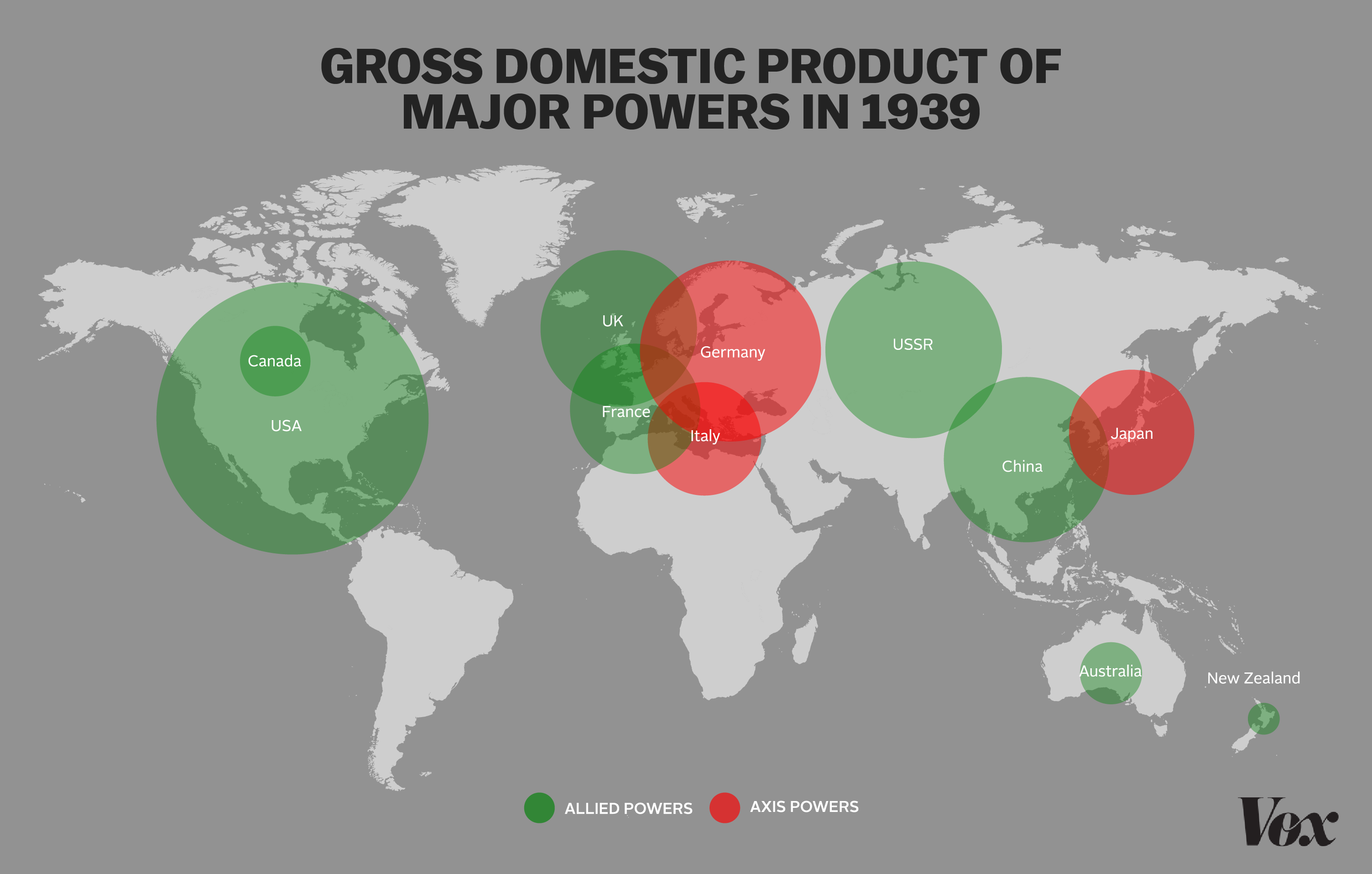
Most viewed map from August 2016.
Well summer is winding down so lets take a look again at what you all thought were the best articles in the waning days of the season:

1) World War II Was a Team Effort, Deal With It by Dale Cozort.

2) Technology in Alternate History by Rvbomally.

3) Map Monday: Colonization of Europe, 1855 by Falkanner by Matt Mitrovich.

4) New Releases 8/16/16 by Matt Mitrovich.

5) Map Monday: And Mighty Be Her Powers by SRegan by Matt Mitrovich.

* * *

Matt Mitrovich is the founder and editor of Alternate History Weekly Update, a blogger for Amazing Stories, a volunteer interviewer for SFFWorld and a Sidewise Awards for Alternate History judge. When not exploring alternate timelines he enjoys life with his beautiful wife Alana and prepares for the day when travel between parallel universes becomes a reality. You can follow him on Facebook, Twitter, Tumblr and YouTube. Learn how you can support his alternate history projects on Patreon.

Thursday, August 25, 2016

World War II Was a Team Effort, Deal With It (Part 2)

Guest post by Dale Cozort.
The first part of this looked mostly at the lead-up to Barbarossa, the German invasion of the Soviet Union, with only a few minor incursions into the actual invasion.

How was World War II a team effort in the last half of 1941 and early 1942, after the Germans invaded the Soviet Union? The Soviet Union was certainly doing the vast majority of the ground fighting at this point, with the vast majority of the German panzer divisions and the Luftwaffe committed in the east.

The Germans were in a war of attrition in the east, and even in those early days of the invasion, the Germans lost a horrendous amount of men and material. David Glantz gives a partial list of the men and material the Germans lost from the start of the invasion until November 1942. The Soviets were doing the bulk of the fighting and inflicting the bulk of the loses, while losing men and material at a high multiple of German losses. The Allies were fighting hard too, but their victories and losses seem like side shows in comparison to the huge number of divisions on both sides of the eastern front, the huge number of tanks and planes  produced and destroyed.

Even before the Soviets encircled the German sixth army at Stalingrad, the Germans had suffered around a million casualties--dead or wounded. They had lost around four thousand planes. That had to have consumed a huge number of pilots who would have otherwise been available to fight the US and British air offensive over Germany. Also, when the Soviets surrounded the sixth army at Stalingrad, they forced the Germans to bring in their "school flights"--partly trained pilots and instructors, along with their equipment--for the airlift. The huge aircraft losses at Stalingrad crippled the German pilot training program as it was just recovering from losses in the airborne invasions of Holland and Crete, cutting into Germany's supply of new pilots at the worst possible time, when the western allies were gearing up for their air offensive over Germany.

So where does the team effort bit come in during this period? What did the Allies contribute? Several things, actually. Not many German divisions were actually fighting the Allies, but a lot of German divisions were tied up guarding against British or American invasion in the west. These were usually not first-rate divisions, but they would have probably done better than the Italian and Romanian divisions on the flanks of Stalingrad, for example.

How many German divisions were tied up in guarding against attacks in the west? A surprising number. Norway alone tied up more Germans than were surrounded at Stalingrad, though the quality and equipment of those troops was by no means comparable. The occupation of France also tied down a large and growing number of German troops. The Mediterranean theater was less of a drain in terms of manpower, at least until the Italian surrender, but the war there required a huge amount of logistics support--scarce oil, scarce air transport, scarce trucks to get fuel across the long stretches of desert from port facilities and railheads. It took far more German resources to support a division at the front line in North Africa than it usually did in the Soviet Union.

Direct British and US supply of tanks and aircraft to the Soviet Union was huge in absolute terms, but not in proportion to Soviet production and much of it came after the Soviet Union had weathered the worst of the German invasion. The Western Allies sent a little over eleven thousand tanks and another couple thousand self-propelled guns--enough  to equip the equivalent of roughly sixty German panzer divisions, as many tanks as the Germans produced in 1943 and two-thirds as many as they produced in 1944.

At the same time, the Soviets produced considerably more T-34s every year after 1941 than they received in total Allied tanks. Lend Lease tanks were well under twenty percent of the total Soviet tank force and many of them were obsolete by eastern front standards. The Western Allies sent over twenty-one thousand planes to the Soviets, and those planes played a somewhat bigger role in the Soviet air battle than the tanks.

If you've researched the Eastern Front, you've probably heard most of that before. What kinds of team effort do most people miss?

1) The elephant in the room: The Western Allies kept Germany from accessing the rest of the world's raw materials. Most of the time that was by naval blockade, but sometimes it was by cornering the supply of vital raw materials in neutral European countries like Portugal and Turkey. Imagine a World War II where the western allies decided to remain neutral in the war between Germany and the Soviet Union. The Germans could buy or barter for Mexican oil as they did before the start of World War II. They could buy iron and nickel and chromium and bauxite and natural rubber from any country in the world willing to sell it to them. All the enormous effort that the Germans put into making ersatz materials could have been used to build tanks and planes and artillery, with the only limit being the German economy's ability to pay for the material.

That's not a trivial limitation, of course. The Germans were always short of hard currency before the war and would have quickly run into limitations after they invaded the Soviet Union. At the same time, they could have imported material to fill in the worst of their gaps.

Granted, a scenario where the west decided to sit out the German/Soviet war isn't likely, but if we're purely trying to figure out relative contributions, the British and American blockade of Germany played a major role in depressing German military production.

2) Throughout the war, the Germans had to look over their shoulders at an approaching avalanche of US men and material. That meant that the Germans knew they had a limited amount of time to defeat the Soviet Union. The Nazi hierarchy reacted to that closing time window by a lot of wishful thinking, seeing victory in the Soviet Union when objectively it wasn't there and they had the resources to know the Soviets weren't beaten. That pattern of wishful  thinking started even before the invasion began, when the Germans produced the munitions and equipment they thought was necessary to beat the Soviet Union, then, before the invasion even started, switched production over to a mix intended to prepare for battle against the US and Britain. It continued through much of the early part of the war, with Hitler holding back tanks and tank engines throughout the summer of 1941 to build up for the coming battle against the Anglo-Americans. Even in 1942, Hitler saw victory after the early summer encirclements and moved key elite units from the eastern front to prepare for the Allies. In the leadup to Stalingrad, he could airlift whole divisions to North Africa and launch a lightning invasion of Vichy France to counter Operation Torch, while leaving sixth army's flanks to be guarded by demonstrably inadequate Romanian and Italian troops, with only threadbare backup from German units that had been bled white and given few, if any replacements.

3) The Allies filled crucial gaps in the Soviet economy. The Soviets did a miraculous job of moving key industrial plants out of the way of the German advance, but losing territory where nearly half of pre-invasion Soviet industrial activity happened caused important gaps that the Allies filled.

 a) Food. The Ukraine was the breadbasket of the pre-invasion Soviet Union. The Soviets made an enormous effort to get food and farming resources out of threatened territory and to destroy anything they couldn't take with them. They were generally very successful in doing that. Instead of finding rich, exploitable farmland, the Germans often found lands where the grain had been hastily harvested and sent east, along with tractors, farm animals and able-bodied men. All of that effort to remove food supplies complicated the German advance because the Germans had expected to feed their armies by seizing food. To a certain extent they did, but the Soviets made it as difficult as they could, even destroying stocks of food they couldn't get out. This was the Soviet system at its most ruthlessly practical--they were leaving millions of Soviet citizens with little food for the coming winter.

At the same time, no matter how ruthless and efficient the Soviets were, they couldn't take the Ukraine's farmland or climate with them and without the land that they lost to the Germans, the Soviets couldn't feed the population already in unoccupied parts of the Soviet Union, much less the thirty million Soviet citizens that they evacuated in front of the German advance. Using the 1941 harvest and slaughtering livestock could provide a short-term solution, but when those stocks were exhausted, Soviet citizens were going to go hungry and they did, not just in Leningrad but in the rest of the country. When the Soviets released several tens of thousands of Polish prisoners of war to the Allies in 1942, many of them were so malnourished that it took months to get them back in fighting shape. The western Allies protested the condition of the men, but eventually had to concede that they hadn't been fed significantly worse  than Soviet citizen outside the military and vital war industries. There simply wasn't enough food to go around and the Soviet Union was on the edge of starvation.

The western allies, especially the US, had plenty of food and they sent a lot of it to the Soviets. They didn't single-handedly stave off Soviet starvation, but they helped a lot. Enough American food came in to keep a million Soviet soldiers supplied. That helped substantially. If that food hadn't come, the Soviet soldiers would have still been fed, but a lot of Soviets outside the military and defense industry would have died of starvation or malnutrition.

b) Aviation gas: The US, alone of the World War II powers, could mass-produce 100 octane aviation gasoline. That gas gave planes that used it a major edge over planes that didn't. As a result, the US produced the vast majority of Soviet aviation gas, and provided additives to upgrade Soviet oil. At any given design level, US aviation gas allowed US and Soviet planes to fly further and faster than they could have otherwise.

c) Aluminum. The US provided over two thirds of the Soviet aluminum supply, vital to Soviet airplane production and for producing engines for Soviet T34 tanks.

d) Rubber: The Soviets had no native sources of rubber and their synthetic rubber efforts lagged behind those of the US and the Germans. As a result the Soviets were chronically short of rubber. That was a huge potential bottleneck. It was simply impossible to build World War II tanks, trucks and planes without rubber and lots of it. Planes averaged half a ton of rubber, while a tank took a ton. Add in tires for military trucks and airplanes and replacement tires for the trucks that kept the Soviet economy going, and you see the problem. The US sent as much as it could spare, with the amount increasing as the US synthetic rubber industry took off.  In terms of tires alone, US Lend Lease to the Soviets totaled a little under 3.7 million units. That's a lot of vehicles driving a lot of miles.

e) Radios. Radios and other communication equipment were a huge force multiplier. In 1941 and through the summer of 1942, the Soviets didn't have enough of them. As a result, Soviets commanders often lost track of where parts of armies were and what was happening to them, often units as large as whole divisions. Where were they? What was happening to them? Were they still in the fight? Without that information the Soviets simply couldn't fight the kind of fast-moving war that the Germans forced on them. The US and Britain, with their advanced electronics industries, filled that gap. For example, the US sent over 380,000 field telephones and well over thirty five thousand radio stations.

f) Training tanks. A lot of the thousands of Lend Lease tanks never saw frontline service, but they did play a major role on the Eastern Front: training tank crews. The Soviets built their tanks the same way they ran most of the rest of the war--with a ruthless peculiarly Soviet type of rationality. They had plenty of raw materials but not a lot of skilled laborers. Given that combination, they built essentially disposable tanks. If a T-34 was unlikely to survive more than X hours at the front, the Soviets didn't build it to last more than X hours plus a small margin. Automotively, the few that didn't get knocked out by X hours were scrap--ready for a major rebuild at best or for scrap recycling. That approach meant that the Soviet could build a lot more tanks with a given number of person-hours and it didn't usually cost them much, because the tanks were usually knocked out by the Germans before they broke down anyway.

The problem though: how do you train tank drivers? Using Soviet tanks meant using a lot of them and leaving them as scrap. Using Lend Lease tanks was the ideal solution. Many of the wouldn't have lasted long on the Eastern Front battle zone, but could be driven a lot longer in training roles.

This is getting long, and we still haven't looked at the impact of the Western Air Offensive. More in a few weeks.

* * *

Dale Cozort is a novelist, editor of Point of Divergence, the alternate history APA, and a long-term Chicago area fan and writer. Check out his website, blog, Facebook and Twitter profiles.

Wednesday, August 3, 2016

World War II Was a Team Effort, Deal With It

Guest post by Dale Cozort.
During the Cold War, with the emotions of that undeclared pseudo-war running high, with the German generals' self-serving memoirs available and the Soviet archives off-limits, the Brits and Americans over-emphasized their contribution to the war against the Germans and treated the massive Eastern Front battles as a side-show.

More recently, in some circles especially alternate history forums like AH.com. the over-emphasis has shifted in the opposite direction, to treating the Allied contributions as minor and of little consequence, with the Soviets capable of getting to the Rhine without the Western Allies and actually likely to do so in most circumstances.

The reality is that the Soviets and the Western Allies were probably both necessary to bring down the Germans and their efforts played off one another in often subtle ways. I won't comment on the more obvious connections, but concentrate on stuff that hasn't been discussed endlessly.

First, while a lot of people treat the Battle of France as kind of a speed bump for the Germans, they lost a lot of planes and air crews in the battle, well over a thousand planes and over three thousand air crew. The Battle of Britain cost the Germans nearly two thousand planes and thousands of aircrew killed or captured. As a result, when the Germans invaded the Soviet Union, they had far fewer planes and trained pilots than they otherwise would have.

Even Holland, in its brief time in the war, had an impact on the future German invasion, inflicting high casualties on German airborne forces and more importantly, disrupting German pilot training. The Germans had a nasty habit of stripping their air school units of planes and the experienced pilots that were training the newbies when they launched major airborne operations. When those operations caused high casualties, as the airborne landings in Holland did--between 200 and 300 JU-52s destroyed, it took the Germans a while to get their pilot training back in gear, resulting in fewer pilots available eighteen months to two years later.

British intervention in the Balkans forced the Germans to send six panzer divisions, plus a motorized brigade that was being reequipped as a panzer division, aircraft and other assets in a very successful blitz. The Balkans didn't delay the start of Barbarossa as much as lot of people have claimed, but it did have a couple more subtle impacts. First, the two panzer divisions that covered the most distance in the Balkans didn't get back and refurbished in time for the Barbarossa kickoff. One of those division suffered heavy losses when their transport ships were sunk on the way back from Greece. Those two panzer divisions actually didn't get into the fight until October, though that was partly due to Hitler's decision to hold them back as the core of a force intended to fight Britain and the US.

Two more panzer divisions would have made some difference on the eastern front, but probably not a decisive difference. The Balkan invasion also had a more subtle impact on the Germans. It put a lot of miles on a lot of equipment that required maintenance after not too many miles. When the Germans overhauled their tanks and trucks and planes after the Balkan campaign, they ate into spare parts that had been intended for the invasion of the Soviet Union. It didn't take long after Barbarossa started before the Germans were feeling the shortage of spare parts, especially truck and tank engines.

Hitler made those shortages much worse in late summer 1941 by holding back new production tanks and tank engines to build up his forces for the coming battle with the US and Britain. He finally released some, but by no means all of the accumulated tanks and spare parts in October, for the attempt to capture Moscow.

Balkan invasion also drew down already inadequate German fuel stocks and munitions and ate up tires--always scarce in a Germany without natural rubber of its own and dependent on scarce and inferior synthetic rubber.

All of this may not have made a decisive difference on the Eastern front--German logistics were a mess even without lack of spare parts. The Germans took far too long to change over the Soviet railroads to a gauge German trains could run on, and captured far too few Russian trains and rolling stock to use the railroads effectively before they were changed over. But it did weaken the Germans in the crucial summer of 1941.

I've been discussing Allied contributions to helping the Soviets so far and you're probably wondering when the 'team effort" stuff is going to kick in. I'm doing this chronologically, and so far the Soviets aren't in the war at all, as a matter of fact, they're propping the Germans up economically, selling them grain and oil and transshipping rubber to them.

Oddly though, the Soviet Union was already helping the Allies in some subtle ways, mainly by keeping Japan distracted and off-balance. When the Soviets made their pact with Germany, they did not make a similar pact with Japan. As a matter of fact, they were already fighting a bitter border mini-war with the Japanese in Manchuria. The Soviets actually escalated that war after their pact with Germany, bringing in crack divisions and trucks from all over the Soviet Union and inflicting a crushing defeat on the Japanese.

The actual fighting on the Manchurian border ended in mid-September 1939, with the Japanese agreeing to humiliating terms. The Soviet Union and the Japanese remained tense rivals, though. The Soviets continued supplying the Chinese Nationalists with war material, advisers and even Soviet planes and pilots throughout the rest of 1939, 1940 and even well into 1941, helping keep the Nationalists in the war and helping tie down Japanese power.

With so much of Japanese power tied down in China, the Soviets had a decisive edge in terms of military power on the Manchurian border from 1939 until the well into Barbarossa, something that the Japanese were well aware of. The Soviet/Japanese tensions did ease with an agreement a few months before Barbarossa, but for a crucial eighteen months from September 1939 to roughly May 1941, the Japanese had to look over their shoulder at the Soviet Far East military when they chose their foreign adventures.

The Soviet presence may have been crucial in keeping Britain in the war after the Fall of France. After Dunkirk, the Brits could barely defend the home islands, much less their Far East colonies. Add a Japanese attack on Malaysia/Singapore and Hong Kong to the German preparations for Operation Sea Lion and looming Italian attacks in North Africa and an already over-stretched Britain, already short of cash to buy weapons and supplies, would have had a horrendous time staying in the war. If the Japanese overran the Malay rubber plantations in late summer 1940 instead of in early 1942, they would have knocked out a big source of British revenue and forced the Brits into an expensive quest to replace the rubber with synthetics. Until they could build synthetic rubber plants, which would take a couple years, British military production would suffer tremendously. World War II military production required huge amounts of rubber and the Japanese were in a position to grab over 90% of world production.

Historically, the US (and probably Britain) started stockpiling natural rubber as the Japanese threat became apparent and those stocks were large enough to carry the western powers through until the US synthetic rubber plants came online. But the stockpiling came with almost 18 months warning time before the Japanese attacked historically and the US synthetic rubber plants were built while the US was at war, with a huge national mobilization--where money was no object and any obstacles could be over-run by war time urgency.

A Japanese attack in the Far East in the summer of 1940 is a nightmare scenario, one of the few that even arguably gave the Axis a serious chance to grow into a major menace. The US simply wasn't ready to challenge Japan at that time and Britain didn't have the forces to make even a semi-credible defense in the Far East. It's not clear that the Japanese had the will or the logistics to do that kind of attack in the summer of 1940, but the presence of a hostile Soviet Union on the Manchurian border and Soviet aid to the Nationalist Chinese that helped keep them in play against the Japanese certainly made such a Japanese attack less likely.

If the German/Soviet pact had been followed by a similar Japanese/Soviet pact in the fall of 1939 and the Japanese had already started turning their attention to a southern option before the fall of France, things could have gotten much more ugly. I would still give the Allies better than even odds to win if the Germans still turned on the Soviet Union, but World War II would have probably been a much more close-run thing.

This is getting long and we haven't even gotten to Barbarossa yet, except in a minor, tangential way. I'll explore this concept more in future posts.

* * *

Dale Cozort is a novelist, editor of Point of Divergence, the alternate history APA, and a long-term Chicago area fan and writer. Check out his website, blog, Facebook and Twitter profiles.

Tuesday, August 2, 2016

Top 5 Posts from July 2016

Most viewed map from July 2016.
So July wasn't one my best months in terms of page views, probably because I took a whole week off from blogging in the middle of it, but we still had some amazing articles. Check them out below.

1) Why Are Alternate History Adaptations So Poorly Made? by Josh Weiss.

2) Flag Friday: Concept Flags for Hearts of Iron 4 by Rock by Matt Mitrovich.

3) Anime Review: Full Metal Panic! by Sam McDonald.

4) The Alphabet of Alternate History: C by Dale Cozort.

5) Map Monday: Greater Lebanon by Simon Regan by Matt Mitrovich.

* * *

Matt Mitrovich is the founder and editor of Alternate History Weekly Update, a blogger for Amazing Stories, a volunteer interviewer for SFFWorld and a Sidewise Awards for Alternate History judge. When not exploring alternate timelines he enjoys life with his beautiful wife Alana and prepares for the day when travel between parallel universes becomes a reality. You can follow him on Facebook, Twitter, Tumblr and YouTube. Learn how you can support his alternate history projects on Patreon.

Wednesday, July 6, 2016

The Alphabet of Alternate History: C

Guest post by Dale Cozort.

Dale Cozort returns with another edition of The Alphabet of Alternate History. If you haven't read it already, check out the letter B.
Cambodia/Vietnam War causes a China/Soviet Clash: On December 25, 1978, Vietnam launched a blitzkrieg war against the Khmer Rouge regime in Cambodia. The offensive took most of Cambodia by January 7, 1979, leaving only a few pockets of resistance and some guerilla fighting. The rapid collapse of the Cambodian regime apparently took China, which was allied with Cambodia, by surprise. The Chinese reacted too late to keep their ally from getting pushed out of most of Cambodia, but on February 17, 1979 they invaded northern Vietnam to take the pressure off the surviving Khmer Rouge forces and allow those forces to regroup. They succeeded to some extent in that goal and Khmer Rouge guerilla resistance remained an annoyance for the Vietnamese for many years.

At the time military commentators did a lot of speculating on what the Soviet reaction to the Chinese invasion of Vietnam would be. Would the Soviets respond to the Chinese invasion of Vietnam by invading China? It was a plausible, if unlikely, route to a war between great, nuclear-armed powers and the world watched carefully.

Complicating the situation, top Chinese leaders had just finished a highly public and very friendly tour of the US, raising the suspicion among the very paranoid Soviets that the Chinese might have sought and gotten US support before they invaded Vietnam. So as a worst case scenario, the Chinese invade Vietnam, the Soviets invade China, the US intervenes on the Chinese side and we end up with World War III.

That wasn't very likely given the high cost of war between nuclear-armed powers, but let's see if the situation can be ramped up a little closer to that outcome than what historically happened. Note that this is obviously not a desirable outcome, just a possible one.

What could have kept the Khmer Rouge regime from folding as quickly as it did? For one thing, it made a mistake when it pitted it's roughly 73,000 man army in a conventional defense against a Vietnamese invasion force of 150,000 men with a lot more firepower. The Khmer Rouge lost over half their army in the very early going. Cambodia didn't have a lot of space to trade for time and they were probably afraid the Vietnamese would establish a 'liberated zone in any part of the country they were able to grab. At the same time, the Khmer Rouge needed to not sit in front of the sledgehammer and get smashed by it. The Chinese were rushing arms to upgrade the Khmer Rouge army and had up to ten thousand advisers working with it.

If more of the Khmer Rouge army had survived the initial assault and been able to mount a more protracted resistance, the Chinese would have had more time to bring the Khmer Rouge up to a higher level and launch the invasion of Vietnam to preserve the Khmer Rouge as a conventional force rather than a guerilla one.

The stronger the Khmer Rouge/Chinese were, the more chance that the Soviets would have to get involved. On the other hand, Soviet involvement wouldn't have to be direct. The Soviets had more sophisticated weapons than the Chinese at that time and would probably have just supplied the Vietnamese with a larger quantity and quality of weapons rather than getting involved directly.

If Vietnam got in too much trouble and weapons shipments couldn't get them out of it, the Soviets might have decided that a limited set of border skirmishes would emphasize the danger of pushing further to the Chinese leadership, in which case things get very dangerous, but the Chinese army wasn't modern enough and didn't have good enough logistics along the Chinese/Vietnamese border to pose too much of a danger to the Vietnamese, given Soviet arms continuing to flow to the Vietnamese. Plus, the Chinese weren't out to conquer Vietnam, just distract the Vietnamese from Cambodia and they were careful to signal the limited nature of what they were doing.

Bottom line: This thing turning into even a limited Soviet/China war was unlikely. It would have also required that the Khmer Rouge remain more powerful longer and that was one regime that needed to go into history's ash heap as quickly as possible. At the same time, people at the time were concerned about a wider war, and that kind of confrontation was a significant, though unlikely possibility.

A China ruled by neither Nationalists or Communists:
What actually happened: After the Manchus were overthrown in 1911, China fragmented, with warlords taking over various provinces and ruling them, or in many cases misruling them as essentially independent countries. The Chinese warlord era and its many wars is potentially fascinating, but is extremely complex and made more difficult by the many unfamiliar names of the factions and personalities, many of them sounding a lot alike to Western ears.

I'll try to simplify this as much as possible without giving you the wrong impression. You should be aware that there were other significant players in the huge, many-sided battle to decide who reunified China.

With that in mind, in the early 1920s through late 1924, you can visualize the competition for China as primarily a three-sided affair. The Fengtian clique controlled Manchuria, headed by the guy westerners called the Old Marshal. At this point, the Old Marshal was supported by the Japanese, though that support was loose and provisional. He also had White Russian military advisers and mercenaries, exiles from the Russian Civil War.

The rival Zhili clique ruled much of the rest of Northern China, including Beijing. It controlled much of the surviving Chinese bureaucracy, was recognized as the official government of China by the British and the US and had an impressive military reputation. It was the strongest surviving faction of the now-splintered Beijing army, a comparatively well-trained and well-organized army that had been built up by the Manchu dynasty after the disastrous war with Japan, and which then turned on the Manchus and played the role of kingmaker for a few years before splintering into warlord factions.

Further south, Sun Yat Sen's nationalists, then a coalition of Nationalists and Communists, were gaining strength with the help of Russian weapons and advisers, but had little influence in Northern China.

The Manchuria-based Fengtians and the Beijing-based Zhili fought two major wars. The first was in 1922 and the Zhili won rather easily. They chased the Fengtians back to Manchuria but weren't strong enough to challenge them in their stronghold.

The Zhili spent the next couple years consolidating their power in Northern China. They seemed unbeatable and likely to be the group that finally reunited China.

The Fengtians had other ideas though. They spent the next two years preparing for round two and they prepared well. Their leadership included an economic genius who brought the economy under control and sent it booming, with a stable currency and a great deal of growth. The Fengtians poured money from that growing economy into their military, expanding their army from 100,000 men to as many as 300,000, equipping them with tanks (French FT-17s) and buying over a hundred, maybe as many as three hundred aircraft--fighters and bombers. They also built up local military production, producing mortars and well as other artillery, ammunition and an impressive number of rifles. They didn't neglect logistics, building roads and railroads to give their military more mobility.

Finally, in late 1924, the Fengtians tried another go at the Zhili. In spite of the Fengtian build-up, the struggle seemed to be developing into a stalemate. Then the Fengtians played their hole card. The Zhili commander nearest Beijing suddenly switched sides and captured the capital, along with much of the Zhili leadership. There is some evidence that the Japanese provided an enormous bribe to motivate him to switch sides. The Zhili pulled some of their best troops off the front line to retake the capital. The Fengtians took advantage of the confusion and demoralization to take the offensive. Other warlord groups that had previously stayed neutral jumped in on the Fengtian side.

The remaining Zhili fought hard, but forty thousand of their troops were trapped and forced to surrender. With a few months, Zhili power near Beijing was broken.

At that point, the Fengtians seemed to have won. Manchurian forces were going to conquer and reunify China again, though with Chinese leadership this time.

Fortunately or unfortunately, that didn't happen. The warlords that the Zhili had suppressed made a comeback. The remaining Zhili reformed under new leadership, diminished, but still powerful. The general who had betrayed the Zhili formed his own faction and soon was fighting against the Fengtians. A Fengtian commander revolted against the clique and joined an anti-Fengtian coalition. The war kept dragging on, with the Fengtians increasingly overstretched and the Manchurian economy struggling to pay for that oversized army.

Finally the Fengtian economic genius resigned, recognizing that there was no way to keep the economy going with the huge drain from the war. His replacement quickly tanked what was left of the economy trying to make the Manchurian economy pay for far more war than it could afford.

The series of wars was very destructive and the many betrayals gradually delegitimized all the factions. Chinese public opinion, which had to some extent looked to these factions as possible leaders of a united China, was appalled at the costly, pointless struggles. They started looking at the Nationalists and Communists as possible unifying forces. Beijing became a much less important prize as the bureaucracy dispersed and the factions fighting for it neared bankruptcy. In 1926 and again, more successfully, in 1928, the Nationalists moved north. They destroyed the remaining Zhili and pushed the Fengtians back to Manchuria, badly defeating a Fengtian army.

In June 1928, the Japanese assassinated the Old Marshall, head of the Fengtians, when he fled from Northern China and headed back to Manchuria. That was the start of the successful Japanese effort to take over Manchuria and turn it into a puppet state.

Unfortunately, the Nationalists were only able to take Northern China with the help of warlords that allied themselves with the Nationalists, but had agendas of their own. Those warlords were nominally Nationalist, at least when they weren't revolting against the central government, and wore Nationalist uniforms, but central government rule remained more fiction than reality in Northern China through 1937, when the Japanese invasion made the point moot.

What Might Have Happened: The Zhili and the Fengtians were both a cut above the run of the mill Chinese warlords. The Fengtians could probably have survived indefinitely as rulers of a de facto independent Manchuria. They just weren't capable of conquering or at least of holding and ruling, the bulk of China. The Japanese were far more of a threat to their power base than the Zhili were. A slightly more paranoid (toward the Japanese) leadership, or a revolt at a strategic time could have kept the Fengtians at home, at least in 1924. Could the Old Marshall's ambitions been channeled into building a strong, unified, independent Manchuria? Could he have become suspicious enough of Japanese intentions in Manchuria that he stayed out of the rest of China's politics?

Would a strong, unified Manchuria have been enough to keep Manchuria out of Japanese hands? Maybe. The Japanese coup that took Manchuria was the work of a renegade faction of the Japanese military, which became strong in the Japanese military when the coup succeeded easily and brought Manchuria's wealth into Japanese hands cheaply. The easy victory encouraged Japanese militarism and led to the Japanese taking bigger and bigger bites out of China until the loss of territory forced Chinese factions together and pushed Japan into a war they couldn't win and couldn't get out of without disastrous loss of face.

But what about China? If the Fengtians had stayed in Manchuria, could the Zhili clique have eventually unified China? Probably not. They were too prone to splintering themselves, as the war with the Fengtians in 1924 illustrated. The urge to split off and compete for power militarily seemed to be in the air in China in the 1920s and 1930s, with a bewildering array of factions competing, some of them little more than bandits and some of them reasonably competent groups who governed their areas well and worked to bring them economic growth.

The Zhili did, at least initially, stand for attempting to reunify China through negotiations rather than force, so it is possible that they might have been able to come up with some kind of unification of at least the core of China.

With the Fengtians out of the way, the Nationalists would have been the main competition, at least early on. At first, the Nationalists were a coalition of Nationalists and Communists, supported by the Soviet Union, which trained and equipped the Nationalist army early on. That coalition splintered, with the Communists purged and the survivors forced to take refuge in remote areas. The non-Communist Nationalists splintered for a while after the purge, with rival Nationalist governments in Nanjing and Wuhan for a while in the mid-to-late 1920s.

With the bewildering number of factions and the tendency toward factionalism, encouraged by the Japanese who wanted to keep China weak, Chinese politics of the warlord era is very hard to predict. Would the Nationalists still have splintered, then come back together with a powerful and intact Zhili faction still in control of the Chinese bureaucracy at Beijing? Would the Nationalists been able to launch a successful Northern Expedition without the costly and chaotic wars that wracked northern and central China in the years before that expedition? Who, if anyone, would have unified China?
Charles I Wins the English Civil War? I'm dipping into waters I'm not horribly comfortable with here. If I step in it too badly, I hope British AH fans step in to correct me. Based on my reading, it looks as though the Royalists had a shot at winning the English Civil War fairly conclusively in late 1642 to early 1643. After that, power shifted more and more to the Parliament's forces and a Royalist victory became less and less likely. At one point in early 1643, the Parliament's sole remaining army in the field, demoralized by previous defeats, was nearly surrounded and cut in half by the Royalists, but managed to survive and force a stalemate. What if Parliament had lost badly there, losing the bulk of their army and demoralizing Parliament's forces further. Charles mops up remaining opposition over the next few months, and the English Civil War is, at least temporarily, over.

What happens next? Is Charles able to consolidate support, or do his actions spark another rebellion? What does he do to rebellious members of Parliament? Does he reconstitute Parliament with those members who remained loyal to him or neutral? Does he try to diminish the role of Parliament? Abolish it altogether? Replace it with a less powerful body?

If Charles remains in power, what impact does that have on the colonies? New England's Puritans built their colonies partly in reaction to what they saw as royal misrule. They would undoubtedly resist royal rule, at least passively. They would also probably gain a large number of refugees, some of them even fugitives from royal retribution.

Much of the English fleet supported the Parliament. Would it continue to do so as Charles reasserted his authority? Would part of the fleet flee to the New World to continue the fight?

What impact would all this have on the Thirty Years War, then raging in Europe? England had continental interests and dynastic ties. Would it get sucked into fighting on the continent more than it was historically?
Canada Bigger (or Smaller): The War of 1812 is a war most Americans would prefer to forget, with the possible exception of the Battle of New Orleans, which happened after peace negotiations were pretty much wrapped up. Britain fought the war on the cheap, with most of its resources focused on the Napoleonic Wars in Europe until the fall of Napoleon. In spite of that lack of resources, Britain held chunks of American territory through much of the early part of the war, especially around Detroit, and when the British regulars were released from the Napoleonic wars, they did rather well against the US.

The war ended up as a stalemate, with no significant territory changing hands. What if significant amounts of territory had changed hands at the end of the war? If the British had held onto control of Lake Erie, they would have probably held onto Detroit and the vicinity. They were attempting to build a British-dominated Indian state in that area, with the help of Tecumseh and his Indian allies. So, the Brits still control Detroit when Napoleon falls and releases British resources for North America. The Brits want to wind the war down, but on as good a terms as they can get. The US military is doing better after a dismal first couple years, but with British power flowing to North America, they might be forced to give up on some then thinly populated border areas to come up with a peace agreement.

On the other hand, if the Napoleonic wars had been prolonged, Britain might have lost some Canadian territory to the resurgent US forces. After his losses in Russia, Napoleon was probably doomed in the long run, but he raised new armies and won some victories even after that. Change a few details (one key prematurely blown bridge) at the Battle of Leipzig and Napoleon might have been able to fight on for several more months. His defeats in late 1813 tended to build on each other, as German allies defected and elements inside France began preparing to switch side.
De-Icing Project-Sea Level Panama Canal: Okay. Let's toss in a wild one. So your standard issue reasonably benevolent Alien Space Bats stop by Earth orbit around 1490, look around the planet and say, “You know, this is a planet that may really take off soon—have an industrial revolution, get into space and all that good stuff. One problem though: Their planet is trapped in a cycle of recurring ice ages and spends most of its time with much of the continent most likely to do an industrial revolution under ice sheets.”

They analyze the potential danger. Earth is in a climate pattern that has two relatively stable conditions: ice age advances and interglacial periods like the one we're currently in. Variations in the Earth’s orbit and tilt determine which of those climates it falls in, but there is a caveat: Through most of the Earth’s cycle, the climate will remain in whichever state it is already in. Why? Ice ages feed on themselves by reflecting more sunlight back into space. Interglacial tend to maintain themselves because more of the sun’s energy sticks around to heat up the place.

So there are a few points in Earth’s cycle where we’re going to go into an ice age whatever the pre-existing climate and a few points where we’re going to warm up into an inter-glacial pretty much no matter how much ice there was to begin. Then there are the ambiguous times, the ones where climate will stay in whichever state it’s in until something knocks it out. Sometimes it takes a lot to knock climate out of the stable zone. Sometimes it doesn’t take much.

The benevolent ASBs calculate that we’re in ambiguous times—that a big enough volcano (a Yellowstone Super-eruption or one as big as the one that happened around 70,000 years ago could push us over into an ice age. So could a big enough meteor—not a planet-buster or a dinosaur-killer, just a fair-sized meteor that tossed enough crap into the stratosphere that we didn’t get summers for a few years, long enough for ice to build up and increase the Earth’s albedo. Ice age climate would, according to their calculations, abort the budding industrialization.

So what is the ASB solution? Sea level passages between North and South America and Eurasia and Africa to allow ocean currents to flow near the equator rather than near the poles as they currently do. That warms up the oceans and makes ice ages very difficult.

Okay, being the skeptical types that you are, you’re undoubtedly thinking that I’m mostly looking for a contrived way to get a sea-level Panama passage at the time of European exploration. That’s totally—true. That’s exactly what I’m doing. I’m also hand-waving away the probability that truly benevolent ASBs would probably look at proposed sea level passages and realize that they would totally change Earth’s climate, probably posing more threat to the budding industrialization than ice ages. Hand wave: maybe the ASBs are from a warmer planet and find the possibility of ice ages abhorrent and warmth the natural order of things.

In any case, the ASBs press a button with the tips of their wing-fingers and vaporize enough land to create sea level straits in Panama or Nicaragua and maybe where the Suez canal is in Egypt. These passages are deep enough and wide enough to accommodate quite a bit of ocean current and incidentally, a lot of ships.

Presto. We now have our Europe going out into the world and finding a different geography, one where you really can get to Asia by ship heading west, though the trip is too long to really be practical. Maybe while they’re at it, the ASBs cut a canal through Baja California. Not really necessary, but it changes the geopolitics of northwestern Mexico a lot.

If the ASB geo-engineering works, the oceans will gradually get warmer, warming the planet. The warming would have limits. We’ve been about where the warming would go to back in the Pliocene. Eventually Greenland’s glacier would mostly disappear, causing a considerable sea-level rise. From old and possibly faulty memory, sea level would go up about 20 feet. The less stable West Antarctic ice sheet would go into a cycle of collapsing and rebuilding, further raising sea levels during the collapses. The larger East Antarctic ice sheet would mostly remain stable. West Antarctica would be a huge cold island during the period when it wasn’t ice covered. I could see it being one of the last colonized places on Earth. As to how long these changes would take: I honestly don’t know. If it took hundreds of years for the ice sheets to collapse, then we might not see Europe being able to use the new lands. If it took a shorter time, suddenly Greenland and some of the arctic islands become prime real estate, probably competed for by the European powers.

Of course this would totally change what crops can be grown where, destroy polar bears as the kind of species they currently are, though based on recent studies they’re adaptable enough that they may survive, and allow diseases like the nasty African malaria to extend into Europe. Actually, given enough time, Europe’s climate would eventually be able to support both monkeys and apes, though it would be a trick for them to get there given the sea level passage between Africa and the Middle East. Maybe they would come in from India once a rain forest corridor was established. And, of course, pretty much every port city in the world would be flooded, and a huge number of islands would vanish entirely. An interesting world, but probably not a nurturing place for industrial revolutions.

* * *

Dale Cozort is a novelist, editor of Point of Divergence, the alternate history APA, and a long-term Chicago area fan and writer. Check out his website, blog, Facebook and Twitter profiles.

Thursday, June 16, 2016

The Alphabet of Alternate History: B

Guest post by Dale Cozort.

Dale Cozort returns with another edition of The Alphabet of Alternate History. If you haven't read it already, check out the letter A.

Belgium doesn’t end up with the Congo. The saga of how Belgium ended up with a huge African empire while stronger European countries like Germany and arguably Italy ended up with relative scraps is an unlikely one. It would probably be rather easy to short-circuit the process either before Leopold developed his personal kingdom there or in the aftermath of the revelations about how bad conditions there got. I could see Leopold’s empire being divided among the European powers, though exactly who would get what is an issue. France, Germany and possibly Britain might get a chunk.

Boer Republics survive. Here is a challenge for you: Make the Boer Republics survive as independent states. That probably means that they somehow have to avoid the second Boer War, because if they fought the British empire single-handed they would lose.

What actually happened: The fundamental problem of Boer Republics was that one of them (Transvaal) was sitting on one of the biggest gold deposits in the world at a time when Britain had a strong presence in South Africa and imperialism was at its strongest. The gold discoveries drew in tens of thousands of prospectors from all over the world, and eventually they outnumbered the Transvaal Boer heads of household by roughly two to one.

The Boers attempted to maintain political control of their republic by imposing long residency requirements before the newcomers could become citizens. They also imposed high taxes on the gold and used the money to buy modern rifles and artillery.

The gold miners and the people who lived off of them weren’t happy with either the lack of political representation or the taxes. Some of them organized a revolt. In 1895, a group of wealthy British imperialists organized a considerable unofficial force of Rhodesian policemen and other British citizens to come to the rescue when the revolt happened--600 men equipped with Maxim guns and several artillery pieces. The plotters among the gold miners got cold feet and tried to cool things off, but Jameson, the leader of the unofficial expedition, went ahead with his part of the plot, a lightning-fast mini-invasion of the Transvaal that attempted to push the gold miners to go ahead with the revolt they had been planning.

The so-called Jameson raid was a fiasco. The Boers killed quite a few of the raiders and captured the rest, along with documents linking them to prominent British citizens and officials. The gold miners sat on their hands. The subsequent trials and other fallout, including a telegram from the German Kaiser congratulating the Boers on their victory poisoned the atmosphere between the Boers and the British and made war close to inevitable.

For the next four years, the two sides prepared for war. In 1899, the British sent an ultimatum requiring the Transvaal Boers to give gold-miners full voting rights. That would have turned power over to the predominantly British newcomers around the gold mines. The Boers felt that war was inevitable eventually, and after a period of fruitless negotiations gave the British an ultimatum of their own to move their troops away from Transvaal’s borders, then struck first when that ultimatum was ignored.

What might have happened: The Jameson Raid was almost postponed when the plotters inside the Transvaal got cold feet. If it had been postponed for long, the Rhodesian policemen who made up a large portion of the Jameson force would have probably been recalled to Rhodesia, where a serious revolt of the Matabele and Shona people was encouraged by the absence of so many policemen.

That might postpone the war a bit, with the Brits trying a Jameson raid type covert operation a couple of years later, after the Matebele War ended. The Jameson Raid and especially the Kaiser telegram brought issues to a head a little earlier than they probably otherwise would have come to a boil. Let’s say we delay the onset of war by a couple of years. Does that make any difference? Suppressing the Boxer Rebellion (1901) would have probably distracted the Brits for a while. That gets us to maybe 1902. If you could postpone matters until tensions in Europe ramped up on the way to World War I, then maybe the war could have been avoided. If World War I went as it did historically, the Brits would have a lot of their capacity for imperialism knocked out of them. That still means that the Boer republics would have to somehow avoid war for at least another eight to ten years until the war clouds in Europe got thick enough to distract the Brits.

Even if the Boers avoided war, they still had the same main problem: They were outnumbered by British citizens in the Transvaal and by a large margin. Even without war, the Brits would probably eventually gain political power and might well vote to become part of British South Africa, which makes postponing the Jameson Raid a dead-end.

What if the discovery of the large gold mines around Johannesburg had been postponed? Historically they were discovered in 1886, and exploited mainly by outsiders of British origin, who by 1896 had a male population outnumbering the Boers 60,000 to 30,000, though those figures are guesses since there was no census in the Transvaal until 1904, after the Boer War (technically the Second Boer War). Let’s move the discovery forward maybe fifteen years to 1901. Does that help, or do the Boers still get overwhelmed? My guess is that they would still be overwhelmed, though if World War I happened on schedule it would take the steam out of British imperialism early enough that a war to annex the Boer Republics would be less likely.

Of course we can’t ignore the impact of not having one of the biggest gold finds ever on the world between 1886 and 1901. The world of the late 1800s took gold seriously, with the major currencies backed by it. The South Africa gold discoveries allowed economies to expand and helped them deal with the nearly forgotten “Long Depression” of 1873 to 1896. And now we’re getting into economics, deep in “My Eyes Glaze Over” territory for most people, even most historians, so I’ll stop.

* * *

Dale Cozort is a novelist, editor of Point of Divergence, the alternate history APA, and a long-term Chicago area fan and writer. Check out his website, blog, Facebook and Twitter profiles.

Friday, May 27, 2016

The Alphabet of Alternate History: A

Guest post by Dale Cozort.

I did a panel at Capricon with a theme of alternate history outside of World War II a few years ago. I decided to do a brainstorming session where I came up with as many alternate history mini-scenarios for a given letters of the alphabet as I could, emphasizing non-western venues as much as possible. When I finished with one letter I planned go on to the next. I ran out of time before I got done with the ‘B’ but there are still some good scenarios seeds and a few saplings in here. I'll try to get at least as far as C before we're done.

 And we’re off, starting with the “A’s”

Argentina without Evita. Eva Peron never reaches national prominence or dies before she is able to gain significant power. What changes in Argentina? A more competent fascist-influenced regime in Argentina? Argentina remains a wealthy first world country? Who takes power in Argentina, and what do they do with it?

Angola captured by the Dutch or Spanish or Brits in the 1600s. Holland munched most of the Portuguese overseas empire and made an attempt to add Angola to its list of trophies, starting in 1641. The Dutch held parts of Angola until 1648, when a large Portuguese fleet from Brazil drove them out. What would have happened if the Dutch had succeeded in holding part or all of Angola? Would Britain have eventually taken the Dutch areas like they did South Africa? Would we have seen Dutch settlers moving inland from Angola like they did in South Africa? Or maybe we would have seen Portuguese settlers playing the role of the Boers, moving inland to escape Dutch domination and setting up an independent state or states. If the Dutch maintained control of part or all of Angola, that would probably cause enough ripples to abort the rise of Napoleon and both of the World Wars, at least in their our-timeline form, so there isn’t much point in speculating on how a Dutch-held Angola would influence World War II.

Angola caught up in the scramble for Africa. In the 1880s, the European powers engaged in a scramble to grab as much of Africa as they could. Boundaries were established as lines on maps in conference rooms in Europe, with little reference to the geography, ethnicity and power on the ground. Those lines got modified somewhat by power on the ground, but generally power or influence in Europe was more important than historical ties or power on the ground in Africa. There were some exceptions to that. By the 1880s Portugal was no longer a great power in Europe, but the Portuguese had held colonies in Africa since the 1500s and had a considerable population there. They ended up with slices of Africa out of proportion to their remaining power in Europe. That didn’t have to be the case. The Portuguese expanded their control in Angola and Mozambique considerably as the scramble for Africa ramped up. The Great Powers tolerated that, but they could have forced Portugal to limit their control to the areas they already settled, or even taken parts of historical Portuguese control away from Portugal and given the land to colony-hungry Europeans. An Italian colony in part of what is now Angola? Not out of the question.

Ashanti grab their coast. The Ashanti were a powerful West African empire centered in what is now Ghana. They were a minor group until the 1700s, when they became early adopters and effective users of firearms. They conquered a wide area and at some points had a centralized army bigger than that of the better know Zulus. What they didn't have, though they tried very hard to get it, was control of the coast of their empire. The British allied with various coastal groups to keep the Ashanti from gaining control of a strip of coast, over which the British established a protectorate.

The Brits and Ashantis fought a number of wars, with the earlier ones pretty much stalemates, but repeating rifles and machine guns tipped the balance in favor of the British and they beat the Ashanti decisively in 1873-74 and again in 1895, when they exiled most of the Ashanti royal family and annexed the territory. The Ashanti revolted in 1900, but unsuccessfully.

So if the Ashanti were able to extend their control to the coast before Britain could project power there, does that change much? Probably not. The neighboring kingdom of Dahomey held their coast, but France had little trouble taking them over. The key factor here was that the Europeans had a near monopoly on repeating rifles and machine guns for the crucial period when they took over most of Africa. Muskets and spears versus repeating rifles and machine guns wasn't a winnable fight. If the Ashanti had been able to control their coast AND find someone to supply them with modern rifles, that would have been another story, but with few exceptions the Europeans had a common interest in not supplying Africans with modern rifles--most European countries had designs on pieces of Africa, so there was generally common interest in not doing a trade that might bring retaliation in areas that they coveted.

There were exceptions to this, and one exception to the general refusal of Europeans to supply weapons to African powers is significant: The Russians supplied both arms and advisors to Ethiopia, where they played some role in allowing the Ethiopians to defeat the Italians in their first attempt to conquer Ethiopia in the late 1890s. In the key battle of that war, the Ethiopians armed 70,000 men with modern rifles from various sources.

Mussolini belatedly avenged that defeat in 1935-36, which set the Italians on a course toward becoming an Axis junior partner.

So, back to the Ashanti: If they controlled their coast, they would also need to find some source of modern weapons. They did have gold to pay for those weapons, but historically could only trade directly through British-controlled territory. The neighboring kingdom of Dahomey, which did control its coast, was able to buy four to six thousand reasonably modern carbines from German merchants, along with some machine guns and even some Krupp cannon, neither of which the Dahomey kingdom was able to use effectively when the French invaded and took over the Dahomey kingdom in 1894.

So it wouldn't have been impossible for the Ashanti to buy modern rifles and even machine guns and cannons. Keeping them supplied with ammunition in the event of a war wouldn't have been easy though, and evolving modern tactics can't be assumed. The Ashanti were pretty good at using their muskets and had reasonably good tactics, but were vulnerable to British bayonet charges historically. Even a few modern rifles would have made bayonet charges a very bad idea.

So let's say the Brits try to take over the Ashanti empire as part of the scramble for Africa, but the Ashantis have used their gold to buy a stockpile of modern rifles, etc, with some ammunition. They prove that the Ashanti empire can't be conquered on the cheap, like most of the African conquests were. Does Britain go to the expense of fighting a real war over the area? Probably not, though they could, in an era of battleships, probably take the Ashanti coast, cutting the Ashanti off from resupply and eventually making their investment in modern weapons useless unless the Ashanti could make their own ammunition. All of this would take a while though and could easily run into other conflicts that would distract Britain, like the Boer Wars, the last of which historically was fought at about the same time as the British annexation of the Ashanti.

 So maybe Britain tries an on-the-cheap war in the 1890s, discovers that the Ashanti will take more force to beat than they want to invest for the time being. They grab areas of the coast under cover of their navy and wait. Then, before they can do the coup de grace, World War I comes along and makes the Ashanti a very low priority. By the end of World War I, Britain no longer has much imperialist steam left, so by default the Ashanti remain independent, at least for a while. What impact, if any, does that have on the inter-war years and on World War II?

* * *

Dale Cozort is a novelist, editor of Point of Divergence, the alternate history APA, and a long-term Chicago area fan and writer. Check out his website, blog, Facebook and Twitter profiles.

Tuesday, May 17, 2016

New Releases 5/17/16

You can support The Update by clicking the banner to your right or the links below if you are purchasing through Amazon!

Paperbacks

Warlock Holmes - A Study in Brimstone by G.S. Denning

Sherlock Holmes is an unparalleled genius. Warlock Holmes is an idiot. A font of arcane power, certainly. But he’s brilliantly dim. Frankly, he couldn’t deduce his way out of a paper bag. The only thing he has really got going for him are the might of a thousand demons and his stalwart companion. Thankfully, Dr. Watson is always there to aid him through the treacherous shoals of Victorian propriety… and save him from a gruesome death every now and again.

E-Books

Wrath of Athena: A Snapshot Novella by Dale Cozort

For eighty million years, the Tourists have taken Snapshots of Earth, creating living replicas of continents. Life in the Snapshots quickly diverges from the real world, creating a universe where humans and animals from Earth’s history fly between Snapshots, exploring, fighting, and sometimes meeting themselves.

A fly-by-night petting zoo lands in Madagascar-24M, the Snapshot of Madagascar the Tourists made 24 million years ago, and promptly finds itself slapped in quarantine. After all, exotic animals from off-Snapshot are a risk, for people, local wildlife, and the environment.

Scott Hardy’s title may be Assistant Veterinary Engineer, but his actual job is shoveling crap out of cages and protecting the “talent”—the nubile youths hired to run the petting zoo.

That doesn’t include protecting the zoo’s star performer, Athena Anders, Hardy’s redheaded, volatile, dish-hurling, on-again-off-again girlfriend. Not because Athena isn’t talented, but because she does just fine taking care of herself. The one thing Athena really loves are the zoo’s stars, a pair of talking dinosaurs.

Then the dinosaurs go missing. And it’s mating season.

The only thing worse than the havoc a pair of breeding dinosaurs can create on an unprotected, unsuspecting world? The wrath of Athena when she finds out who’s responsible.

To readers, authors and publishers...

Is your story going to be published in time for the next New Releases? Contact us at ahwupdate at gmail dot com.  We are looking for works of alternate history, counterfactual history, steampunk, historical fantasy, time travel or anything that warps history beyond our understanding.

* * *

Matt Mitrovich is the founder and editor of Alternate History Weekly Update, a blogger for Amazing Stories, a volunteer interviewer for SFFWorld and a Sidewise Awards for Alternate History judge. When not exploring alternate timelines he enjoys life with his beautiful wife Alana and prepares for the day when travel between parallel universes becomes a reality. You can follow him on Facebook, Twitter, Tumblr and YouTube. Learn how you can support his alternate history projects on Patreon.

Friday, April 1, 2016

Top 5 Posts from March 2016

This list of the most viewed articles in March is not an April Fools joke. So enjoy!

1) Map Monday: What Remains, Part 2: 1961 A.D. by Zek Sora by Matt Mitrovich.

2) Map Monday: Constantinople Not Istanbul by Rvbomally by Matt Mitrovich.

3) Flag Friday: US Imperial Naval Ensign by Hellerick by Matt Mitrovich.

4) Anime Review: The Place Promised in Our Early Days by Sam McDonald.

5) Was a "Man In The High Castle" Scenario Ever Possible? by Dale Cozort.

* * *

Matt Mitrovich is the founder and editor of Alternate History Weekly Update, a blogger for Amazing Stories, a volunteer interviewer for SFFWorld and a Sidewise Awards for Alternate History judge. When not exploring alternate timelines he enjoys life with his beautiful wife Alana and prepares for the day when travel between parallel universes becomes a reality. You can follow him on Facebook, Twitter and YouTube. Learn how you can support his alternate history projects on Patreon.

Thursday, March 31, 2016

Getting To The Man In the High Castle: Would a German Atom Bomb Let The Axis Take Over the US?

Guest post by Dale Cozort.

There are really two question here: Could Germany have gotten atomic bombs first, and if they had, could they have used them to force a US surrender? Answers: Not impossible, but extremely unlikely for the first question, and flat out ‘no’ to the second one.

Could Germany have gotten the bomb? Unlikely. Thanks mainly to Nazi scientific policies the US had the great brain trust of scientists from all over Europe, while Germany had the subset of scientists willing to work under the Nazis. When the Nazis came to power in 1933, Germany lost around half of its highest profile physics and chemistry people, including over a dozen past or future Nobel prize winners. Then the Germans compounded the damage by drafting a lot of physicists into the army, where some of them ended up dying on the Eastern Front. That last probably wouldn’t have happened if the Germans had given nuclear weapons priority, but the early manpower drain was pretty much baked in given the Nazi regime. The US also had the resources to bet on long shots, while Germany had to rebuild essentially everything military from a very low level.

Germany might have gotten an a-bomb if it started early enough and gotten an improbably large number of fast breakthroughs, but the program would have taken resources out of something, which meant that they would have had less of that something. Planes? Tanks? Synthetic fuel or rubber plants? V2 rockets? V2 rocket development would have been the most logical thing to drop and the V2 program did cost approximately as much as the US a-bomb program, though not necessarily at the right time to have been switched into a nuclear program.

The biggest problem with a German atomic bomb was that making atomic bombs wasn’t just a matter of physics breakthroughs. You had to make those breakthroughs first, but then you had to build a vast, resource-hungry industry nearly from scratch. The US built what was then the biggest factory in the world to separate out usable uranium, and that was just one of the components in a vast industry that produced the US bombs. At its height, US atom bomb making took around one percent of the nation’s entire electricity supply. A comparable German effort would have required a much higher percentage of the smaller German electricity supply. One key component of the uranium purification process was going to take so much scarce copper that the US took the extraordinary step of borrowing fifteen thousand tons of silver from US stockpiles to substitute for the copper. Even the giant US economy had trouble providing enough of a wide range of essentials for the program, from electronic components to lumber to skilled workers in a huge range of skills.

Bottom line: producing atomic bombs with 1940s technology was a huge resource drain that required large amounts of very specific materials. Even if the Germans knew how to build a bomb, they would still have to produce it without gutting their ability to do everything else they had to do in order to stay in the war and they would have to find enough of every crucial raw material in large enough quantities to make an ongoing series of bombs.

That’s a formidable set of reasons Germany was unlikely to get atomic bombs, but let’s say for the sake of argument that Germany did somehow get the bomb before the US, maybe by mid-1944. That would take an extreme amount of luck, given their resource and scientific limitations, but even if they did, they still wouldn’t be anywhere close to taking over the US, or even taking out Britain or the Soviet Union. Early atomic bombs simply weren’t war winners on their own.

Historically, the Germans had no delivery system that could reach the US, even with conventional bombs. They could reach Britain and some parts of the Soviet Union, but the British had built up strong enough air defenses that by 1944 the Germans had trouble even doing reconnaissance missions over Britain, much less bomber raids. It’s not that the Germans couldn’t get a plane with a nuke through, but there would be a significant chance--maybe close to fifty percent, that a nuke carrying plane wouldn’t make it through to target.

And what plane would the Germans have used to carry that bomb? Early US nukes were big, bulky things. Early German efforts would probably be similar. The early US bombs weighed in at around ten thousands, give or take a few hundred. That was many times too heavy to fit on V2 rockets, even if the Germans managed to produce both the rockets and the bomb. The only German mass-production bomber that could deliver that much weight in bombs was the very unreliable Heinkel 177, and even it might have had trouble with the width of an early atomic bomb. Historically, Fat Boy was a tight fit even for a B29.

The Germans couldn’t make a lot of bombs initially. Even the US, with far more resources to throw at the problem, had a limited number of nukes. They had the test bomb, then the two they dropped, then one more that could have been dropped in late August 1945. After that, the US bombs would have become available at the rate of roughly 3 to 4 per month. So the Germans, at best, make three or four, test one and have roughly three or four more available per month after that.

How would things play out after that? Worst case scenario: The Germans use one or more at Normandy. That could have been devastating, but then the US would have known for sure that the bombs were possible and would have pushed essentially unlimited resources into getting its own bomb as quickly as possible.

What if the Germans hit London and maybe Leningrad or Moscow and demanded that the Allies surrender? Not a great idea when the Allies had such a huge advantage in air power. So the Germans try a Hiroshima-scale bombing of London. First, good luck getting the bomb through, given the very strong Allied air defenses and the unreliable He-177. But let’s say the plane gets through and hits London.  Do the Allies surrender? Not likely. Most likely response: Hit Berlin with an unprecedentedly huge firebombing raid, calculated to maximize casualties. A big firebombing raid could produce as many, if not more, immediate casualties as an early atomic bomb. Granted, it might take a thousand or even two-thousand planes to rack up those casualties, but the western Allies had enough planes to do, as they demonstrated time and again. So the next night or the one after that, the Allies hit another major German cities and announce that any further a-bomb attacks on Britain will get the same response. Two German cities burned for every British one hit. Historically, the US, at least, attempted to hit mostly military targets. If the US went for mass civilian casualties, they could add to the mayhem.

The Allies would also make finding and taking out German a-bomb production a huge priority, even if they hadn’t already and redouble efforts to knock out any German bombers within range of Britain. Remember that producing a-bomb material required huge factories, huge amounts of power and very specific raw materials. That would make it very vulnerable to an enemy with near-total air superiority.

What the Allies wouldn’t do is surrender, especially not the Americans, who would be invulnerable to attacks long enough to get their own bombs.

Finally, even if the Axis somehow managed to bomb the US, it wouldn’t cause a US surrender, and even if it did, a US government that surrendered would quickly lose their power to enforce that surrender. A-bombing New York or Washington would not deter would-be-guerrillas in fly-over country and US troops would be very reluctant to fire on fellow citizens to enforce an Axis occupation. So that occupation would require Axis troops in the US in numbers that the Axis simply couldn’t support.

Bottom line: An Axis atomic bomb was almost certainly not going to happen and wouldn’t win the war for the Axis anyway, though it might by them a stalemate until the US a-bombs came on line.

By the way, none of this should take away from your enjoyment of The Man in the High Castle. Alternate history doesn’t have to be plausible to be a good story or even to give you insight into real history.

* * *

Dale Cozort is a novelist, editor of Point of Divergence, the alternate history APA, and a long-term Chicago area fan and writer. Check out his website, blog, Facebook and Twitter profiles.

Wednesday, March 2, 2016

Was a "Man In The High Castle" Scenario Ever Possible?

Guest post by Dale Cozort.

Amazon's adaptation of The Man In High Castle has raised the profile of alternate history lately. Is it plausible? Is there any way the Axis Powers could have not only beaten the Allies but also invaded and subdued the United States?

Let's start out by saying that an Axis victory of any kind was unlikely. I've seen alternatives that might lead to stalemate and Axis survival due to Allied exhaustion, but I've never seen anything plausible that leads to a complete Axis victory. On the other hand, I love a challenge, so I'll explore some possible routes to an Axis victory and the kind of nightmarish Japanese/German occupation of the US depicted in the popular TV series.

Why was an Axis victory so unlikely? A lot of reasons.

Wealth/Industrial capacity. Add up the percentage of world wealth from the three major Axis powers, then compare that total to the US alone. The US started out ahead and widened its lead through the war. And that's not even taking into account Britain and the Soviet Union. [Editor's Note: See this map to get a better idea of what Dale is talking about.]

Access to natural resources. A big chunk of the motive for World War II was that the Allies controlled the bulk of the world's natural resources and the Axis powers wanted a bigger share. Of the three Axis powers, Germany managed to temporarily grab some of the Soviet Union's resources, but not the one they needed the most, which was oil. Japan grabbed a very rich natural resource area, but never had enough shipping to take advantage of it and quickly lost much of their already inadequate shipping to US subs once the US got their faulty torpedoes fixed.

Technology. In spite of the hype about Axis secret weapons, the US had a major technological lead in a lot of the war-fighting areas, especially electronics, automotive and some areas of chemistry, particularly in producing high octane fuel and mass-producing explosives. Those advantages led to extremely reliable tanks for the era, proximity fuses that made Allied anti-air much more deadly, much more accurate naval gunnery, bomb-sights and aircraft analog computers that the Axis never quite duplicated, more effective radar, television-guided attack drones and of course the Atom bomb.

The Axis powers managed to convince most of the people they conquered that their vicious or brutal former rulers were the lesser of two evils. That prevented them from effectively using the manpower and resources they conquered. Convincing Ukrainians that Stalin was the lesser evil was quite a feat, but the Germans managed it in a lot of cases, while the Japanese convinced an amazing number of Chinese factions to unite against them in the name of national survival.

Both Japan and Germany quickly got themselves into resource-devouring quagmires with no exit.

Once Germany invaded the Soviet Union, how could they avoid getting bled white, even in the most optimistic scenario? Let's say the Germans managed to grab Moscow in late summer 1941--which might or might not have been possible. Let's take it an unlikely step further and say for the sake of argument that when Moscow fell the Soviets lost control of much of their army. The mostly peasant Red Army evaporated like the Tsarist army did at the end of World War I. That's very unlikely, given the effective Soviet organs of repression and the continuing stream of German atrocities that pushed Russians together, making the war a fight for national physical survival. Let's say, however, that a Soviet army disintegration happened. Simply occupying the Soviet Union would still absorb huge amounts of manpower because it's so huge and even a Soviet Union that disintegrated would still have huge numbers of armed Russian roaming it and still have large production facilities the Germans couldn't reach.

If Stalin died and the Soviet Union collapsed, the vast expanses of Russia would undoubtedly produce warlords, some Communist and others probably anti-Communist or simply opportunists with no ideology. The Germans would have to garrison the vast area for decades and it would continue to drain their resources. And that's even given an improbably successful campaign.

What about Japan? Let's say the Japanese knocked out the Nationalists--destroyed Chiang's remaining German-trained troops and occupied the Nationalist wartime capitol. War over? Not even close. They would still have to deal with China's remaining warlords, plus the Communists, who would quickly flow in to fill the vacuum. After the many atrocities of the Japanese occupation, the Chinese would have continued to fight and continued to tie down Japanese troops.

Axis leadership. The Japanese purged almost all of their most rational leaders during the 1930s, resulting in leaders who seemed to almost always take the most destructive of two possible courses. Their action often were aimed more at rivals within the Japanese military than at foreign enemies.

Hitler started out as an evil leader with reprehensible goals but he was initially good at understanding the reality he was trying to subvert. He lost his grip on as German victories multiplied and especially when facing defeat, while kicking out technocrats and promoting fanatics around him. Mussolini was simply a very bad military leader, consolidating more power than he could possibly use, draining the already weak Italian military by never sticking to one objective long enough to attain it and not understanding the limitations of Italian logistics and equipment. All three leaderships were extremely vulnerable to victory disease, where early German and Japanese victories seemed to confirm Axis propaganda about the weakness of the democracies and led all three Axis countries into trying far more than their militaries were capable of. In spite of their much-hyped "efficiency", the Axis powers used their limited resources poorly.

Finally, a complete Axis victory, invading and conquering the United States, would have meant ferrying and supplying armies across the Atlantic and Pacific Oceans. Neither Japan nor especially Germany had any realistic possibility of bringing a large army across the ocean and supplying it. Japan held naval superiority in the Pacific from Pearl Harbor to the Battle of Midway, but didn't have enough cargo vessels to supply a ground invasion of Hawaii, much less invading the mainland US. Not only that, but their warships didn't have the range to escort an invasion fleet or do battle with the US fleet off the US west coast. They were only able to attack at Pearl Harbor by using desperate measures to extend their aircraft carriers' ranges--stacking oil in drums on the decks and carrying it in the bilge, then using essentially every oil tanker the Japanese had available to refuel along the way.

The Japanese deliberately built a short-range navy, because they planned to force the US fleet to fight its way across the Pacific against strings of Japanese-held island chains, then defeat the weakened US ships in a decisive battle near the Philippines. If the decisive battle was to be fought near Japan, Japanese ships could use the tonnage the US used for fuel for armor and firepower.

German U-boats could challenge the British and US, but that could at best only deny the Allies use of the Atlantic. Invading the US would have meant controlling the Atlantic not just denying it to the Allies. The Axis never came close to challenging the British and US fleets in that way and wouldn't have had enough cargo ships to invade anyway.

Wow! That's a formidable list of reasons why an invasion of the US couldn't happen. Do I really want to even bother trying to figure out how it might be possible? Is there any way an Axis we would recognize as such could invade the US, or is this one of those alternate history nightmares that couldn't really happen? We'll look deeper in the next few weeks.

* * *

Dale Cozort is a novelist, editor of Point of Divergence, the alternate history APA, and a long-term Chicago area fan and writer. Check out his website, blog, Facebook and Twitter profiles.