Showing posts with label Matthew Quinn. Show all posts

Wednesday, February 4, 2015

New Covers for Matthew Quinn's Picking Up Plans in Palma and The Beast of the Bosporus

Matthew Quinn has informed me that there are two new covers for his alternate history short stories. First up, here is the updated cover for "Picking Up Plans in Palma":
And here is the updated cover for "The Beast of the Bosporus":
Both covers were designed by Alex Claw, who also designed the original covers. Quinn said he decided to change the covers because he "wanted something more detailed" and calls the new covers "significantly improved over the older ones." What do you guys think about the new covers? Let us know in the comments.

* * *

Matt Mitrovich is the founder and editor of Alternate History Weekly Update and a blogger on Amazing Stories. Check out his short fiction. When not writing he works as an attorney, enjoys life with his beautiful wife Alana and prepares for the inevitable zombie apocalypse. You can follow him on Facebook or Twitter.

Tuesday, June 10, 2014

New Releases 6/10/14

You can support The Update by clicking the banner on the top right or the links below if you are purchasing through Amazon!

Hardcovers

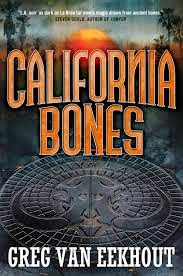
California Bones by Greg van Eekhout

When Daniel Blackland was six, he ingested his first bone fragment, a bit of kraken spine plucked out of the sand during a visit with his demanding, brilliant, and powerful magician father, Sebastian.

When Daniel was twelve, he watched Sebastian die at the hands of the Hierarch of Southern California, devoured for the heightened magic layered deep within his bones.

Now, years later, Daniel is a petty thief with a forged identity. Hiding amid the crowds in Los Angeles—the capital of the Kingdom of Southern California—Daniel is trying to go straight. But his crime-boss uncle has a heist he wants Daniel to perform: break into the Hierarch's storehouse of magical artifacts and retrieve Sebastian's sword, an object of untold power.

For this dangerous mission, Daniel will need a team he can rely on, so he brings in his closest friends from his years in the criminal world. There's Moth, who can take a bullet and heal in mere minutes. Jo Alverado, illusionist. The multitalented Cassandra, Daniel’s ex. And, new to them all, the enigmatic, knowledgeable Emma, with her British accent and her own grudge against the powers-that-be. The stakes are high, and the stage is set for a showdown that might just break the magic that protects a long-corrupt regime.

Extravagant and yet moving, Greg van Eekhout's California Bones is an epic adventure set in a city of canals and secrets and casual brutality--different from the world we know, yet familiar and true.

Paperbacks

Flashing Steel, Flashing Fire: A Short Story Collection by Matthew Quinn

The vivid imagination of Matthew W. Quinn has carried him far from our mundane world to places of mystery, wonder, and terror. Now is your chance to join him on ten adventures ranging from Dark Age Denmark to a world where North America and Europe face off against the Indian Ocean in a Cold War to the forgotten and frightening corners of our own present day...

COIL GUN-On the opening night of the Third World War, an American spaceport official plays off against an Afrikaner intelligence officer with the fate of the world in the balance. Previously published in PRESSURE SUITE: DIGITAL SCIENCE FICTION #3.

LORD GIOVANNI'S DAUGHTER-A scholar and adventurer must rescue his employer's daughter from the fierce Talassos, prince of the serpentine Naga.

NICOR-A teenage Dane on his first Viking raid encounters something fiercer than the Anglish. Previously published in HEROIC FANTASY QUARTERLY.

MELON HEADS-A pair of young lovers in Ohio discover what they thought an urban legend is very, very real...

PICKING UP PLANS IN PALMA-An American spy infiltrates the brutal Afrikaner Confederation to retrieve vital plans, not knowing the terrible fate awaiting him...

ILLEGAL ALIEN-A group of undocumented migrants seeking the American dream encounter aliens of a different sort...

THE BEAST OF THE BOSPORUS-After the destruction of the Ottoman fleet at the Battle of Lepanto, Grand Vizier Sokollu Mehmed Pasha seeks power of a different sort, power that puts him at the mercy of powers beyond human comprehension.

I AM THE WENDIGO-Many tales have been told about the wendigo, the man-eating fiend of the northern woods, but when has the wendigo ever spoken for himself? Previously published in CHIMAERA SERIALS.

LORD OF THE DOLOROUS TOWER-In a world wracked once by a celestial impact and then again by a fierce Dark Lord, two adventurous teens go treasure-hunting in the Dark Lord's tomb...

WESTERNMOST THRONE-On the eve of the U.S. Presidential Election, a campaign receptionist finds out her boss is much more than he says he is...

Sherlock Holmes - Gods of War by James Lovegrove

1913. The clouds of war are gathering. The world's great empires vie for supremacy. Europe is in turmoil, a powder keg awaiting a spark. A body is discovered on the shore below Beachy Head, just a mile from Sherlock Holmes's retirement cottage. The local police are satisfied that it's a suicide. The victim, a young man, recently suffered a disappointment in love, and Beachy Head is notorious as a place where the desperate and depressed leap to their deaths. Holmes, however, suspects murder. As he and Watson investigate, they uncover a conspiracy with shocking ramifications.

To fans, authors and publishers...

Is your story going to be published in time for the next New Releases? Contact us at ahwupdate at gmail dot com.  We are looking for works of alternate history, counterfactual history, steampunk, historical fantasy, time travel or anything that warps history beyond our understanding.

* * *

Matt Mitrovich is the founder and editor of Alternate History Weekly Update and a blogger on Amazing Stories. Check out his short fiction. When not writing he works as an attorney, enjoys life with his beautiful wife Alana and prepares for the inevitable zombie apocalypse. You can follow him on Facebook or Twitter.

Friday, June 6, 2014

Preview: Flashing Steel, Flashing Fire: A Short Story Collection by Matthew W. Quinn

Friend of The Update Matthew Quinn has a new short story collection out, Flashing Steel, featuring many of his alternate history short fiction. See the description from Amazon below:

The vivid imagination of Matthew W. Quinn has carried him far from our mundane world to places of mystery, wonder, and terror. Now is your chance to join him on ten adventures ranging from Dark Age Denmark to a world where North America and Europe face off against the Indian Ocean in a Cold War to the forgotten and frightening corners of our own present day...

COIL GUN-On the opening night of the Third World War, an American spaceport official plays off against an Afrikaner intelligence officer with the fate of the world in the balance. Previously published in PRESSURE SUITE: DIGITAL SCIENCE FICTION #4.

LORD GIOVANNI'S DAUGHTER-A scholar and adventurer must rescue his employer's daughter from the fierce Talassos, prince of the serpentine Naga.

NICOR-A teenage Dane on his first Viking raid encounters something fiercer than the Anglish. Previously published in HEROIC FANTASY QUARTERLY.

MELON HEADS-A pair of young lovers in Ohio discover what they thought an urban legend is very, very real...

PICKING UP PLANS IN PALMA-An American spy infiltrates the brutal Afrikaner Confederation to retrieve vital plans, not knowing the terrible fate awaiting him...

ILLEGAL ALIEN-A group of undocumented migrants seeking the American dream encounter aliens of a different sort...

THE BEAST OF THE BOSPORUS-After the destruction of the Ottoman fleet at the Battle of Lepanto, Grand Vizier Sokollu Mehmed Pasha seeks power of a different sort, power that puts him at the mercy of powers beyond human comprehension.

I AM THE WENDIGO-Many tales have been told about the wendigo, the man-eating fiend of the northern woods, but when has the wendigo ever spoken for himself? Previously published in CHIMAERA SERIALS.

LORD OF THE DOLOROUS TOWER-In a world wracked once by a celestial impact and then again by a fierce Dark Lord, two adventurous teens go treasure-hunting in the Dark Lord's tomb...

WESTERNMOST THRONE-On the eve of the U.S. Presidential Election, a campaign receptionist finds out her boss is much more than he says he is...

Frequent guest reviewer Kieran Colfer will be reviewing the collection so expect to see his review in the near future.

* * *

Matt Mitrovich is the founder and editor of Alternate History Weekly Update and a blogger on Amazing Stories. Check out his short fiction. When not writing he works as an attorney, enjoys life with his beautiful wife Alana and prepares for the inevitable zombie apocalypse. You can follow him on Facebook or Twitter.

Friday, January 31, 2014

Freedom, Tyranny, and Technology: The Message of the Afrikanerverse

Guest post by Matthew W. Quinn.

Hey everybody, it’s Matthew W. Quinn again. I’m taking advantage of a recent opportunity afforded by our friend Mr. Mitrovich to discuss my alternate history spy tale, “Picking Up Plans In Palma.”

I’ve got a friend who is rather more zealous in religion than me who once said every work of fiction has a message. I strongly disagree with him on this issue, since I never wrote any of my short fiction with the intention of making a point.

(Okay, “The Beast of the Bosporus” is basically “don’t mess around with things beyond human comprehension,” but most Lovecraftian stories have that due to the nature of the beings involved.)

However, “Picking Up Plans In Palma” is the one exception thus far. The Afrikanerverse in which it is set began as a challenge to create a cold war between the U.S. and an Afrikaner power in the vein of S.M. Stirling’s Draka, so this world is ultimately a homage to the Drakaverse. However, like many others, I had plausibility issues with the Drakaverse. One of the biggest ones is how a society in which 90% of the people are chattel slaves (and most of those are illiterate) can equal or exceed a coalition of free societies, even after the enormous non-Draka “own goal” that was the Eurasian War.

Imagine if American slavery lasted another generation. George Washington Carver’s career as an inventor would have been greatly stunted if ever got off the ground in the first place (his former masters educated him but if they ran into financial trouble he might’ve ended up sold south and working in a field somewhere) and both the USA and the world would be so much poorer for it.

Although the Afrikaner Confederation does not practice slavery, “better than the Confederacy” is damning with faint praise. The die-hard colonialists of Rhodesia limited secondary education for blacks, while for much of its history apartheid South Africa provided blacks with only the education to do menial jobs. The education system in the Jim Crow South similarly failed to develop the talents of the African-American population and successful blacks risked victimization up to and including lynching by jealous whites, which no doubt contributed to the South’s endemic poverty. Though the Confederation’s black underclass is not as grotesquely impoverished as in our world’s South Africa or Mississippi, the same issue remains (and also applies to the Indian lower castes and the Southeast Asian peasantry, also under Afrikaner rule).

On top of not developing (when not actively repressing) the full potential of its non-whites, the later Confederation makes the same mistake (to a much lesser degree) with the white female population. Due to the influence of the Theonomic Party (modeled on Christian Reconstructionism), there comes a fair bit of cultural pressure against women seeking careers and even higher education. This prompts journalist Katje de Lange (lover of “Palma” protagonist Connor Kelly) to immigrate to the United States, thus enriching the Confederation’s great rival at the Confederation’s expense. That reminds me of a quote from the Ottoman Sultan Bayezid II on the “wisdom” of Spain’s expelling of the Jews.

(Amy Chua wrote a whole book, Day of Empire, on the economic benefits of ethnic, religious, etc. tolerance. I recommend reading it.)

The result of all this is that the Confederation stagnates while the United States prospers, especially in the exploitation of space. This ultimately results in the nuclear war depicted in my short story “Coil Gun” (available as part of Pressure Suite: Digital Science Fiction #3) that bloodies the U.S.-led League of Democracies but completely destroys the Confederation and its traditionalist allies.

So if this gets into “too long, didn’t read” territory, here’s the gist. Limiting the opportunities for education and advancement of part of your population (be it in the name of an economic system that only benefits part of the supposed ruling class or a misinterpretation of religion) is shooting your community or your country in the foot, if not dooming it outright.

Thursday, March 7, 2013

The Strange Death of Sokullu Mehmed Pasha

Guest post Matthew W. Quinn.

From A New Look at Sokullu Mehmed Pasha, published at Miskatonic University.

The consensus of historians on the assassination of Grand Vizier Sokullu Mehmed Pasha on October 11, 1579 AD (or 20 Sha'ban 987 AH in the Islamic reckoning) is fairly well-known in our field. The Ottoman Sultan Murad III, alienated from the vizier who had served his father and grandfather so long and ably by his mother Narbanu Sultan and Venetian-born wife Safiye Sultan, took steps to reduce the vizier's influence on government. The vizier's allies were sent to faraway positions or assassinated. Ultimately, a mentally-unstable dervish talked his way into the vizier's office and stabbed him. This kind of intrigue was fairly common in the Ottoman Empire, especially during the period known as the Sultanate of Women.

However, some recent discoveries by Miskatonic University researchers of documents thought lost forever during the civil unrest that wracked Constantinople when the Janissaries were suppressed has shed new light on the circumstances of the vizier's assassination and an incident that took place in 1571.

These documents paint a far more sinister picture of the vizier. They include accusations of dealings with agents of Safavid Persia, with whom the vizier had counseled peace as opposed to the usual border wars, and even black magic. The documents accuse the vizier of, under the influence of an agent of Persian Shah Tahmasp I, acquiring a book of black magic from an Armenian merchant who had visited the long-vacant shrine of a corrupted Sufi order that had been destroyed by Turkish nomads not long before. The use of this book resulted in an incident in Constantinople that killed dozens of Ottoman soldiers, destroyed one war galley and forced the scuttling of a second, and caused significant damage to the Bayezit II mosque.

These accusations against Sokullu are not new, but have been long dismissed as the slanders from his political enemies. However, the mosque was damaged somehow, necessitating repairs by the famed Ottoman architect Mimar Sinan in 1573 and 1574. Furthermore, it is often said that converts make the best zealots. Safiye Sultan was a Catholic before she became a Muslim, while the most recent evidence suggests Narbanu was an Orthodox Greek from Corfu before her conversion. If Sokullu was involved in the dark arts, or was widely believed so, this could have provoked the ire of the Imperial women. They would not wish one so tainted to continue virtually ruling the Ottoman Empire in place of their son and husband. And the dervish orders might be willing to provide an assassin to dispose of the vizier, especially given his (tangential) connection to a Sufi order that had become warped by dark forces.

Of course, this is all just speculation. The documents describe how the soldiers killed in the incident were buried in a mass grave outside Constantinople that was given special attention by Muslim imams, Orthodox Christian priests, and even a Jewish rabbi, while the materials used by Sokullu in the incident were confiscated, burned, and abandoned in Persia. Should this mass grave or the dumping site be found, it would lend credence to the incident described in the documents.

So just why was the Grand Vizier assassinated, and is the author's theory about dark powers manifesting in Constantinople actually true? Read "The Beast of the Bosporus" on Amazon.com or on Smashwords to find out!

Friday, November 30, 2012

Review: The Beast of the Bosporus by Matthew Quinn

H.P. Lovecraft is one of the underrated writers of speculative fiction. He is credited with influencing the horror writers of the 20th century, popularizing weird fiction and giving us the classic Cthulhu Mythos. Alternate historians have been infatuated by the author as well. Published alternate histories about the author or his fiction include "A Colder War" by Charles Stross and The Lovecraft Chronicles by Peter Cannon. Online you can find Lovecraft's influence in the timeline Green Antarctica by DValdron and many of the ASB Settings of Bruce Munro.

As a big fan of Lovecraft myself, I was of course excited to read the new short story "The Beast of the Bosporus" by Matthew W. Quinn (author of the alternate history short story "Coil Gun" and a contributor to this blog). The story is set in the Ottoman Empire, post-Battle of Lepanto. The Sublime State's navy has recovered from the defeat, but Grand Vizier Sokollu Mehmed Pasha fears Lepanto is one of many failures the Turks will experience in the future. Perhaps the strange book printed on skin brought to Istanbul by an Armenian merchant holds the key to victory...

The problem with short stories is, well, they're short. You can't give away to much in a review without spoiling the plot. Still short fiction is a wonderful medium of story-telling that I have come to appreciate in the past couple of years. Although I have been consuming short fiction recently through audio podcasts, it is refreshing to read a good short story like Quinn's.

"The Beast of the Bosporus" fits well into the Mythos. The characters' short-term greed causes them to experiment with forces they cannot possible understand, which is a theme of many Lovecraft works. Except for a couple of typos and moment of clumsy wording, the story is well-written and I think we can all look forward to quality short fiction from the prolific Quinn in the future.

* * *

Matt Mitrovich is the founder and editor of Alternate History Weekly Update and a volunteer editor for Alt Hist magazine. His fiction can be found at Echelon PressJake's Monthly and The Were-Traveler. When not writing he works as an attorney, enjoys life with his beautiful wife Alana and prepares for the inevitable zombie apocalypse. You can follow him on Facebook or Twitter.

Wednesday, October 10, 2012

Review: Clementine by Cherie Priest

Guest post by Matthew W. Quinn.
It’s Matthew W. Quinn again, and I’ve got another review for you. It’s Cherie Priest’s Clementine.

Set in Priest’s Clockwork Century universe, the novel tells the tale of former Confederate spy Maria Isabella “Belle” Boyd who finds herself in the employ of the famous (or infamous) Pinkerton National Detective Agency in Chicago.

For starters the novel, published by Subterranean Press, is a quick read. It’s exactly 201 pages. I’m surprised there was even a hardback edition issued it’s so short, but then again, it is written by Priest, one of if not the major author of steampunk. Although the short length precludes subplots and lots of depth, many readers won’t mind.

Secondly, the novel starts out with a bang. Air pirate and escaped slave Croggon Beauregard Hainey is chasing after his airship, which has been stolen from him, in another (stolen) airship. No boring expository beginning here, but straight to the fun.

I also liked how each chapter begins with the name of the main character, be it Hainey or Boyd. And when the characters meet, there’s a bit of humor. Chapter Eight, for example, is titled “Our Players are Compelled to Collaborate.” I actually laughed upon seeing it.

The novel also introduces some interesting concepts, including a tiny dirigible-like flyer that carries two people. It fulfills the function of a personal plane or helicopter in a time where the technology for such things isn’t available. I like it.

There’s not a whole lot that’s bad about the book. I’d like some more information about how the superweapon that becomes a major part of the plot later on is supposed to work. A weapon of its nature would need line of sight to devastate an enemy city — we’re not talking a conventional artillery piece like Gerald Bull’s “Project Babylon” (the unfinished “Super Gun” of Gulf War fame) that could attack enemy targets from safe positions here. Also, the book jacket implies Boyd has to collaborate with Hainey, whom she is hunting, when there’s some kind of betrayal. That’s not how it goes down, although that’s not really much of a problem.

Also, I’d have liked some more thoughtfulness on the part of both Hainey and Boyd. The former is an escaped slave, but most of his targets are in the Union states (where it’s easier for a black man to move about), never mind that the state that whipped and imprisoned him is the Union’s enemy. Meanwhile, Boyd has to make decisions about loyalties, most importantly in a scene very late in the book where one might think she’s seriously conflicted. Although too much of this would go against the short and sweet nature of the book, a few extra paragraphs might help.

Overall, Clementine is a quick and fun read. 8.5 out of 10.

Friday, September 28, 2012

Review: The Exile’s Violin by R.S. Hunter

Guest post by Matthew W. Quinn.
Howdy everybody. It’s Matthew W. Quinn, and this is my first novel review for Alternate History Weekly Update. My first victim is The Exile’s Violin, the debut novel of R.S. Hunter.

Here’s the plot. In a steampunk secondary world of Tethys, one-eyed private eye Jacquie Renairre hunts for both the murderers of her parents and conspirators seeking to start a war in an unlikely alliance with bored socialite Clay Baneport.

Let’s start with the good. The book begins well, with the heroine in the midst of a nightmare. Given all the writing advice I’ve received exhorting writers to begin with a grabber, Hunter does that well. The book also includes some good character moments, like Jacquie’s father not being able to find his glasses and Jacquie points to them atop his head. One doesn’t need to tell readers a character is an “absent-minded professor” type when one can show details like this.

Many steampunk books don’t get into politics, especially the politics of social class and oppression, even though the era (the late 19th and early 20th Centuries) was full of social ferment (the labor movement and feminism), imperialism, etc. This book does, to its credit.

There’re some amusing moments, like revealing what Jacquie hates the most, a later comment about “professional courtesy,” and how a new friend named Clay joins one of Jacquie’s criminal ventures. There are also some good descriptions in the book, including the comparison of an ominous elevator in a foreign library to a trap for travelers, how someone’s wounds “wink” at Jacquie, and various metaphors likening gun barrels to eyes.

Unfortunately, all this is outweighed by the bad. A lot of stuff that’s very important to the story gets introduced very late with no foreshadowing. Alchemy, which seems to be magic-ish, doesn’t get introduced until Chapter 22. Meanwhile, the revelation that a supposed ally is really the evil mastermind behind the conspiracy comes out of nowhere, with his motivation (he’s a poor man who worked his way to the top and wants to overthrow the rich aristocrats so everyone can have the same chance) unforeshadowed. It would have been much better if the character had shown class resentment or there were references to his primary supporters being the poor.

Meanwhile, there are some things that just aren’t believable. Jacquie’s first act of revenge for her parents’ death goes way too smoothly. There’s no indication she’s had any combat training during her time with her father’s friend Serge, but she’s able to quickly bind a mercenary leader. And she’s able to kill far too easily for someone who’s never done it before. Later on in the story, Jacquie and Clay are asked to leave their guns before they meet with a powerful politician. Jacquie refuses to give up the guns, ultimately getting permission to bring her guns in after emptying them. The person in charge of said politician’s security is entirely cool with that and doesn’t put up with much of an argument. That doesn’t seem remotely realistic — she could have extra bullets hidden in her clothes, plus pistols make good clubs.

Later, a man in a very high place is forced to resign after being linked to several terrorist attacks. Attacks in which people are killed. Jacquie and Clay learn about this, then go about their investigations as usual. Firstly, I would imagine there’d be more discussion about whether to even continue the mission, since the conspiracy would seem to have been exposed at this point. Secondly, it doesn’t seem like the politician suffered any further consequences. If this is due to political corruption — I suspect this was Hunter’s intent—it should at least be remarked upon. In our history, Oliver North was arrested, indicted, and tried for his role in Iran-Contra, which was far less destructive than the one depicted in the book.

There’s a lot of time-skipping, filled in by “telling” rather than showing. And there isn’t much telling, for that matter. Six years pass between Jacquie’s parents’ murder and her first act of vengeance, but we don’t learn a whole lot of just what was going on during this time. Obviously some of this is necessary to keep the book at an acceptable length, but I would have filled in more of the blanks—her life with Serge, why she chose to become a detective, etc. There’s another time skip and we find Clay is working for Jacquie in her private-detective agency. This was a bit abrupt—although this character is established as being rich and bored, we never seem them discussing the issue before.

The Verdict

Some good concepts, but not well executed.  4 out of 10. This is Hunter’s first novel, so let’s hope his future work gets better.

Wednesday, April 4, 2012

“Daily Life In…” History Real or Otherwise

Guest post by Matthew W. Quinn.

Something essential for writers of both historical fiction and alternate history — basically historical fiction in a history that is not ours – is showing just how people lived. Unless you’re writing a faux textbook like For Want of a Nail, you’re going to need to have characters living their daily lives when things like World War II beginning in 1938 or a comet wiping out the Northern Hemisphere in the late 1870s happen.

This requires a level of detail on the lives of ordinary people that’s often hard to find in history books. A book focusing on, say, the maneuvers of armies or macroeconomics is not going to describe what a typical house was like or the food people ate.

However, I was listening to the appearance of writer Ahmed Saladin on the Writing Excuses podcast awhile back and he suggested a series that had been very helpful to him.

The series is called “Daily Life In…” and was published by Greenwood Press. There look to be dozens of these books.  They cover all different time periods and geographical regions, including Tang China, the Inquisition Era in Spain, the Mayan and Aztec civilizations, the Nubian civilization, Jewish culture in medieval Europe, and Renaissance Italy.

For my just-finished epic steampunk Western novel Battle for the Wastelands, I checked out three of the books from the Fulton County library system. Daily Life on the Nineteenth Century American Frontier provided a lot of material for the depiction of the rebel Merrill army and the culture of the southeastern region of my world in general, as well as a lot of useful stuff for a steampunk novel series I’ve brainstormed but haven’t actually written that begins with a Confederate victory in the American Civil War. Daily Life in Civil War America provided more such information, along with some military stuff if I remember right, while Daily Life in Victorian England will help me write the more steampunky parts taking place in the cities of the Northlands and south of the Iron Desert.

Unfortunately, there’s a bit of a catch. It does not appear to have had a large print run. Prices on Amazon seem to be in the neighborhood of $50 each. I would recommend checking out your local library, be it public or college, before taking the plunge and buying them. Given how heavily-represented the series is at the Villanova college library, it might be these were originally textbooks.

However, this series does not represent the only books one can find on individual-level world-building. Another book I’ve read in this vein is The Civil War Notebook of Daniel Chisholm: A Chronicle of Daily Life in the Union Army 1864. In addition to learning about the last days of the American Civil War, it also features some material about his life before and after the war. Back when I was in high school, I read The Year 1000, which was about Saxon England and went into a lot of detail about how people lived, worked, etc.

The book wasn’t perfect — the edition I read implies the Normans imposed the right of the First Night in England after the Conquest and evidence for that even existing is rather spotty — but it has a lot of useful information someone writing historical fiction set in Saxon England (think Bernard Cornwell’s “Lords of the North” series) or alternate-history set in a world where, say, Harald Hardrada took England in 1066 or Harold Godwinsson drove William the Conqueror back into the sea.

So if you’re writing a historical or an alternate-historical tale, you’re going to need to world-build on both the macro and the micro. Finding background material on large-scale stuff isn’t that hard, but at the micro level, things get tricky. Hopefully some of these suggestions will help you.

Friday, December 30, 2011

Best of 2011

I know I said I would not post anything until 2012, but I thought I should take a moment and list some of the best of 2011.  Now there is nothing scientific about the selection criteria (I do not even limit winners to those works published in 2011) and I probably never will have any official rules if I do this again next year.  The one constant is that AH Weekly Update discussed them at some point.  This is still my opinion, so feel free to disagree (in fact I encourage it). 

Anyway here are the winners of the best alternate history for 2011:

Best Novel: I am going to have to go with When Angels Wept by Eric G. Swedin (certainly this is a greater honor then winning the Sidewise Award).  War Blogger, however, might disagree with me and go with East Wind Returns by William Peter Grasso.  They are both good books and I highly recommend that you read them if you get the chance. 

Best Anthology: While there were only two anthologies reviewed this year, I have to give the nod to Robert Cowley's What if? series.  It is still an excellent series of counterfactuals and a must read for any legitimate alternate historian.

Best Short Story: "Coil Gun" by Matthew Quinn gets the nod, but by default since we did not review any short stories separately this year.  Next year I will try and bring you more reviews of short stories.

Best Showcase: This is a difficult category to rate, especially since an online timeline does not get a showcase unless the reviewer already believes this is an excellent piece of alternate history.  So to make things simpler I am going to give it to the most viewed showcase, which is Dominion of Southern America by Glen from Alternatehistory.com.  Congrats!

Best Comic: Titan by Michael Tymczyszyn and Andy Stanleigh also gets the nod for best comic by default, but let me stress the fact that getting the nod this way does not mean it is a bad book.  It just means that we need to review more comics.

Best Television Show: I was not sure whether I should have changed the title of this category to "Worst" instead of "Best", but I decided to go with "Best" for sake of conformity.  I have to admit this year was a bad year when it came to watching alternate history on television, so as much as I hate to do this, I have to given the nod to Spike TV's Alternate History.  Sure it was overly dependent on bad special facts and loaded with implausible gibberish, it still managed to maintain a shred of dignity by not forcing me to stare at underage crotches!

Best Interview: Well this is a very difficult category to choose from.  I did some great interviews over this year and certainly Matthew Quinn would win if I just did it by the number of page views (by the way everyone should read the end of this interview where Matt gives some good advice about how to deal with arguments on the Internet).  Yet I think I will call it a tie and also give a nod to Dale Cozort, the long time alternate history fan who I just had a great time talking with.

Best Contributor: I cannot make this decision by myself, but if you look to your right you will see a poll where you can help select the best contributor of 2011.  I will announce the winner in two weeks time.

Well everyone I had a great time this year and I am very happy with how far this blog has come.  I look forward to making 2012 an even more remarkable year for Alternate History Weekly Update!

*   *   *

Mitro is founder, editor and contributor of Alternate History Weekly Update. When he is not busy writing about his passion for alternate history, he spends his time working as a licensed attorney in the state of Illinois and dreams of being a published author himself one day.

Monday, November 21, 2011

Weekly Update #29

Editor's Note

Thanksgiving is this Thursday, so I will not be writing my usual number of weekly posts.  I do plan to post a review of Prologue by Greg Ahlgren and post an interview with said author this week as well.

I am still polishing up my untitled, alternate history short story and hope to have it ready for the publisher by next month.  Kier Salmon has been very helpful as a beta reader and I wanted to give her a special thank you in this Weekly Update.

Meanwhile, we got our first readers from Kenya and Pakistan.  Welcome.  On top of these new readers, we are less then 200 page views away from breaking our monthy view record!

And now the news.

The Future of Airship Updates

So I have written two Airship Updates (which can be seen here and here), but I am questioning whether I will continue with this feature of Alternate History Weekly Update.  While I love reading about airships, I just do not know if I can give justice to the topic.  So I am playing around with the poll feature of Blogger and I am leaving up the future of Airship Update to you, the reader.  Your question is "Should Mitro keep writing Airship Updates" and you have three answers to choose from:
  • Yes.
  • Yes, but someone else should write it.
  • No.
 The final decision is up to you.

Update on Matthew Quinn

Matthew Quinn is the author of the short story "Coil Gun" and is a friend of Alternate History Weekly Update.  According to his blog, he has been very busy as of late.  He has has wrote some comments on the Destroyermen series and is writing a screenplay for "Coil Gun".  This sounds like an excellent idea to me and I wish Quinn the best of luck in this endeavour.

Thomas Mallon on Alternate History

For those who do not know, Thomas Mallon is a famous novelist and critic.  Mallon is the author of the novels Henry and Clara, Two Moons, Dewey Defeats Truman, Aurora 7, Bandbox, and most recently Fellow Travelers; as well as writing four works of nonfiction. He is a former literary editor of GQ, where he wrote the "Doubting Thomas" column for ten years, and has contributed frequently to The New Yorker, The New York Times Magazine, The Atlantic Monthly, The American Scholar, and Harper's. He was appointed a member of the National Council on the Humanities in 2002 and became Director of Preservation and Access of the National Endowment for the Humanities in 2004. He then served as Deputy Chairman of the NEH.

So he has a pretty impressive resume, but does he know what he is talking about when he discusses alternate history?  You can check out his article on The New Yorker Never Happened: Fictions of Alternative History and listen to him talk about the genre on The New Yorker Out Loud.  On that podcast he discusses the Harry Turtledove books he read over the summer and Stephen King's new novel 11/22/63.

Links to the Multiverse

Articles

10 Themes Shared By Historical Fiction and Science Fiction by Annalee Newitz at i09.

Universe or two-niverse by Frank Mulligan at Wicked Local Plymouth.

The Multiverse and Theism: Theistic reflections on many worlds by J. W. Wartick.

Steampunk powers female characters forward by Ashley Strickland at Geek Out/CNN.

When Time is a Battlefield: The Most Brutal Time Wars! by Charlie Jane Anders at iO9.

Books

Review of 11/22/63 by Stephen King done by Mike Fischer at The Kansas City Star.

Review of Anno Dracula by Kim Newman done by The Virtual Victorian.

Review of Opening Atlantis by Harry Turtledove done by Agamedes at PissWeakly Reviews.

Online Works of Alternate History

Begun that revision of Harry Turtledove's Timeline-191 I've mentioned a few times at Fiat Lux.

Fifth-place teams put 'wild' in Wild Card by Christina Kahrl at ESPN MLB.

Newt Gingrich Is an Author of Alternative Histories. What If He Wrote an Alternative History of Himself? by John DeVore at The New Republic.

Trimback by Jim Reid.

Two Interesting Alternate-History Scenarios... at The World According to Quinn.

Television

‘Family Guy’s 9/11 Counterfactual by Alyssa Rosenberg at Think Progress.

Games

Review of Cold War Gone Hot done by Whisperin' Al at The Wargame Shed

Wednesday, September 21, 2011

Interview: Matthew Quinn

I now give you Matthew Quinn, author of the short story "Coil Gun":

Can you tell us a bit about yourself?

I grew up in Marietta, Ga. and attended the University of Georgia from 2003-2007. I earned two degrees, a bachelor’s in magazine journalism and a bachelor’s in history. I worked for three and a half years for The Griffin Daily News (in Griffin, Ga., which is south of Atlanta) and in January 2011, became the editor of The Johns Creek Herald, a weekly newspaper in one of Atlanta’s northern suburbs.

I have been sending out short stories for publication in magazines since 2001. My first acceptance was in 2007, a short horror story entitled “I am the Wendigo” published by the now-defunct webzine Chimaera Serials. In 2008, I sold two short fantasy stories, “Nicor” and “Lord Giovanni’s Daughter,” to the print magazine Flashing Swords, which went under before they could be published. In 2009, I sold “Skirmish at the Vale’s Edge,” a piece of licensed BattleTech fiction, to the BattleCorps web-site. “Coil Gun,” which I sold to Digital Science Fiction over the summer of 2011, is my first professional-level sale.

What got you interested in alternate history?

When I was in middle school, I read Harry Turtledove’s The Guns of the South on a Scout trip on AMTRAK. By high school — not sure when — I was interested enough to type alternatehistory.com into a web browser and I liked what I found. After lurking for a bit, I joined the site and have been there ever since, commenting on other people’s timelines and scenarios and posting my own for comment.

What is your short story "Coil Gun" about?

It takes place during the opening night of World War III in a timeline where the Dutch settled South Africa 200-odd years earlier than in our own history and their territorial expansion was not restricted by the Dutch East India Company. The end result is a Cold War between the United States and the Afrikaner Confederation, an apartheid-like regime that spans most of the Indian Ocean basin. The chief controller of an American satellite-launch field (which uses the titular coil guns) is trying to replenish orbital assets lost in the Afrikaner first-strike while an Afrikaner intelligence officer down in a bunker watches the progress of the war on an enormous screen and tries to identify trends the Afrikaner military and political higher-ups should know about.

What inspired you to write "Coil Gun"?

On the alternatehistory.com discussion forum, the user whose handle is "reddie" posted an alternate-history challenge. The challenge was to create a scenario where the U.S. is in a cold war with “a realistic quasiDraka”--the “apartheid juggernaut.” Rather than being Anglo-Saxon like S.M. Stirling’s Draka, the oppressive African superpower’s white-supremacist ideology should emerge from Afrikaner culture. I wrote several versions of a timeline with a point of divergence during the Dutch war of independence against Spain. Once I had a world, it was just a matter of writing stories taking place in it.

How did you come up with the title?

The story revolves around the coil-guns used to launch satellites, so the title made sense.

How did you get it published in Digital Science Fiction?

I’d been sending it out and revising it when it got rejected for quite some time—definitely more than a year. I took it through two writing groups I’m a member of, one in Kennesaw, Ga. and the other in Duluth, Ga., and greatly revised the American Carl Sanderson’s sections to strengthen his character. I found Digital Science Fiction on Ralan.com, sent it in, and it was accepted.

What are you reading now?

I’m re-reading Island in the Sea of Time by S.M. Stirling for a book-club meeting. I also started reading The Wolf Age by James Enge, which I purchased from Pyr Science Fiction and Fantasy at DragonCon, but I haven’t gotten very far.

What are your current projects?

My goal is to finish my novel Battle for the Wastelands, which I describe as “a post-apocalyptic steampunk Western” by Veterans’ Day this year. That’s looking less likely to happen, so I’ve set a secondary deadline of “by the end of 2011.” I’m also writing two villain-protagonist superhero short stories for an anthology my Kennesaw-based writing group is putting together. I had the idea for a new science-fiction universe at the 2011 DragonCon and I just started writing a short story set in it. Humans are part of an empire ruled by alien pterodactyl-analogues and that empire is falling…

I also blog at http://www.accordingtoquinn.com/.

Do you have any upcoming works set in the "Coil Gun" universe?

I have a completed espionage story I intend to submit to the next issue of DSF, as well as an unfinished story also set during the opening night of WWIII.

Do you have any advice for other writers?

Read a lot and write a lot. If you have access to a public library, you should be able to find a lot of how books on how to write there. The Cobb County public-library system I grew up using had a whole bunch of books on things like characterization, plot, setting, etc., as well as more interesting stuff like The Writer’s Complete Fantasy Reference.

If there’s a writer’s group that meets near you, join one. “Near” can be relative — I joined both of my groups while living forty minutes to an hour away. If there isn’t, start one, and if you don’t, join an online group like Critters. None of the stories I’ve sold haven’t had critique from other people before they were submitted. “Coil Gun” and “Skirmish” went through each of my writing groups twice, while “Wendigo” was critiqued by UGA professor Dr. Barry Hollander, several people from Critters, and some people who lived in my dorm. “Nicor” and “Lord Giovanni’s Daughter” were also critiqued by Dr. Hollander and people from Critters.

If you can go to conventions, be sure to do so — they’re golden opportunities to network. If I hadn’t gone to DragonCon in Atlanta, I wouldn’t have known BattleTech was still going, let alone that I could write fiction for it. Nor would I have found a publisher who seems interested in Battle for the Wastelands.

Be sure to look for markets. The big Writer’s Market book (and its affiliated Web site) and Ralan.com and Duotrope.com are good places to look, as are the conventions.

Also, although Internet forums can be good sources for inspiration and sounding boards for ideas, don’t spend too much time on them. There’s an XKCD web-comic depicting a haggard man up at an ungodly hour of the night and when his wife or girlfriend asks him to come back to bed, he tells her he’s doing something important—“SOMEONE IS WRONG ON THE INTERNET!” That is something to avoid — there’s not much benefit to winning an argument on a message-board and you could be doing so much else in the meantime. This applies to other Internet-based distractions as well, but I used forums as an example because for me, they’re the worst.

----

Check out Korsgaard's review of "Coil Gun" here.