Showing posts with label What If History. Show all posts

Thursday, December 29, 2011

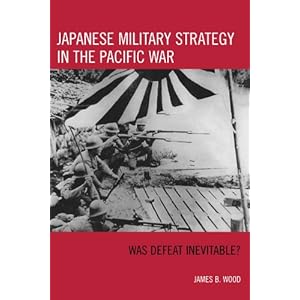
Review: "Japanese Military Strategy in the Pacific War: Was Defeat Inevitable" by James B. Wood

Grade: B-/C+

I believe this is a first for the AH Weekly Update insofar as this is the first review of a non-fiction alternate history book. Now, you may think: aren't those terms mutually exclusive by sheer definition? Yes, they usually are. However, Wood's book combines both traits as he first briefly analyzes various fields that influenced and guided Japanese strategy and plans during WWII, only to summarize counterfactual approaches which could have helped the Imperial Japanese forces in his final chapter.

It is of import to notice that all the counterfactual possibilities presented by Wood share one commonality, which is that they were choices that were actually recognized and advocated by ranking members of the Japanese military. They are, as such, not products of the author's mind and 20/20 hindsight.

Going chapter by chapter, Wood takes a look at Japan's preparations, at the reasons commonly attributed to the nation losing the war and what could have been changed, going from the preventable losses inflicted on its merchant marine, the mishandling of its potent submarine force, the naval leadership's fetish with wishing for a decisive battle and avoiding it at the same time (the Japanese plan for the Battle of Midway is such an example), the shortcomings of its air force and the mishandling of the war by the Japanese army.

Now, each of the factors Wood addresses are significant enough to warrant at least one book of their own. The internal fractures not only between the Army and Navy High Command, but between leading figures within each branch of the armed forces, already on their own deserve a thorough "What if?" treatment.

For example, did you know that Admiral Yamamoto actually threatened that he and the whole Navy staff would resign if his plan to attack Pearl Harbor was not adopted? Admiral Chuichi Nagumo, his superior, had favored an attack against the Malaya and Indonesia that would potentially have kept the USA out of the war a bit longer. Most other professional militaries would have called the bluff and sacked such an insubordinate subordinate. But Japan's command structure was so fractured, mired in political infighting, and fragile that this type of behavior became endemic.

Wood's book is not without problems, of which many can be directly connected to the book's short length. Each chapter is, at best, 15 pages long.

I will cite from a very good review on Amazon to specify them:
His critique of Japan's war effort fails to distinguish between strategic mistakes and defeat in battle. When the Japanese lose while pressing their initiative, they are guilty of systematic over-extension; when they lose on the defensive, they are guilty of conceding the fight to the enemy's terms. They are criticized simultaneously for failing to stick to their game plan and for failing to adapt to new situations. Apparently the Japanese can neither have their cake nor eat it.
Likewise, readers must go without a precise definition of the defeat in war that Japan is trying to avoid. Is any negotiated settlement that prevents occupation of the home islands better than a "defeat"? Wood seems content to see Japan lose all its conquests and all its continental holdings, avoid invasion, and call it a draw.
This brings me to the two decisive questions: is the book worth your while, and is it worth your money?

On the former point, the answer is a clear and endorsing "Yes". Yes, it is. It provides ample sources for its points and covers lots of ground, albeit in rather brief episodes. If there was nothing else, it would still serve as a good introductory read for all those interested in the problems (and chances!) of the Japanese military in the Pacific Campaign 1941-45.

The latter, sadly, is a "No". "Japanese Military Strategy in the Pacific War: Was Defeat Inevitable", discounting the chapter and final bibliographies, covers barely 115 pages worth of text and sells for more than $25 on Amazon at the moment. That is not a favorable ratio for the content that is provided, especially since Wood could easily have made his chapters twice as long. He certainly had enough material to work with for that.

As such, I can recommend "Japanese Military Strategy in the Pacific War: Was Defeat Inevitable" as a book you ought to get from your local library, or if you find it massively discounted from an online retailer. Spend the full price only if you're desperate.
* * *

War Blogger is the Internet handle of Sebastian P. Breit, author of the alternate history novel Wolf Hunt. You can find news, reviews, and commentary on all matters regarding WW2 on his blog, The War Blog, and follow his writing progress on his personal website.

Friday, October 28, 2011

Interview: Nicholas Pardini

Today I share with you my interview with Nicholas Pardini, co-host of the What If History podcast.

Tell us a bit about yourself?

I am current graduate student in Finance at Villanova University. For my undergraduate years I studied Economics and Entrepreneurship at UC Santa Barbara. Once I graduate, I plan pursuing my start up investment firm full time (Nomadic Capital Partners). I also write extensively about economics and the financial markets for leading investment commentary website Seeking Alpha. Outside of finance, history is my favorite subject to learn and read about in my spare time. It also useful for analyzing current market trends versus the past. Other things I like to do include playing golf, traveling, and other outdoor activities.

You were recently quoted in a USA Today article on student loan debt recently. Can you tell us about that?

I wrote a column on Seeking Alpha about how student loans are the next major debt bubble two months ago. A USA today columnist read it and interviewed me about the implications of this issue and how it will create severe problems for my indebted peers while being a severe drag on the economy.

What got you interested in alternate history?

I've always been a big history buff and during my undergrad years in UCSB, I read a book about counterfactuals by Niall Ferguson, that got me thinking about alternate outcomes for various other historical events. It is interesting how fragile certain directions in history really are.

What gave you the idea to start an alternate history podcast?

I wanted to do a history podcast with a unique approach. After discovering that there was no podcast related to alternate history available on the market, I thought by doing this show I would fill a gap of content for history fans. I talk history with Brian anyway on a regular basis, so we just transformed our conversations into a podcast.

How did you come up with the title?

I wanted a title that effectively describes the content of the show. The Alternate History Podcast and whatifhistory.com analyzes the alternative paths of history by contemplating what if historical events went the other way.

What do you use to record and edit your podcast?

I use garage band and a skype recorder podcast to record the show.

How does one actually get their podcast available to be downloaded on iTunes?

To get your podcast on iTunes, you produces three shows and submit your feed for review on iTunes. If you get it approved, you will have the show on iTunes. Popularity of your show, however, is up to your own efforts to make quality content.

How did you and Brian meet?

I met Brian Peotter in my AP US History class in high school. He was the only other class mate who actually enjoyed history. Now six years later, he is only one of just a few friends from high school I'm still in touch with. I brought Brian on the show because of his in depth knowledge of history and perspective for the gravity of the aftermath of various events.

You seem to focus on a lot of American history PODs, is that because you enjoy American history or do you find that is what your audience prefers?

Brian and I tend to focus on American history because we have the most knowledge about it. I also am strongly into Roman history, and post-medieval European history. However, my favorite type of history to cover is economic history as it ties with my strong interest in the financial markets. We will cover scenarios from all eras and regions of world history, but listeners should expect more content related to US History and economic history in the near future.

What does the future hold for the What If History podcast?

Expect a new show to come out every week or two. Eventually we will add more written content to the What If History website.

With your background in economics, are we going to see more economic what ifs in the future?

I think we will. I just have to figure out how to convey the subject material in a way that people who do not follow the stock market every day understand what I am talking about. I currently do economic and investment analysis on my other podcast Wall Street University for current news. In Wall Street University, my co=host Jeremy Saltzberg and myself discuss current events in the markets, make quick stock picks, and teach a weakly investing lesson.

However, for What if History, I will focus on more on historical issues. Topics I want to eventually do a show on include passing the Community Reinvestment Act, Glass Steagall's repeal, the New Deal, and what if's related to the US failing to embrace free trade in the 1990's.

What book(s) are you reading now?

I am currently reading a lot of trading related books such as Fooling Some of the People All of the Time by David Einhorn. However, in the realm of history I am currently reading the Decline and Fall of the British Empire by Piers Brendon. The British Empire is fascinating subject and Brendon portrays it a very comprehensive way. Also, I recommend reading Niall Ferguson's books and I plan on reading his book Civilization once it is released state side.